You want quick, reliable HVAC help in Arlington, TX, and you need to know who to call and what to expect. Local technicians can diagnose common AC problems fast, offer clear repair or replacement options, and help you keep your home comfortable without surprise fees.
Trusting a pro saves time and prevents small issues from turning into big, costly breakdowns.

This article guides you through common repair needs, what a professional installation looks like, and how routine maintenance protects your system and budget. You’ll learn how local companies serve both homes and businesses and what to check when comparing service offers.
Key Takeaways
- Choose technicians who explain repair vs. replacement clearly.
- Regular maintenance prevents most mid‑season breakdowns.
- Compare local HVAC pros for price, warranty, and reviews.
Comprehensive AC Repair Services in Arlington
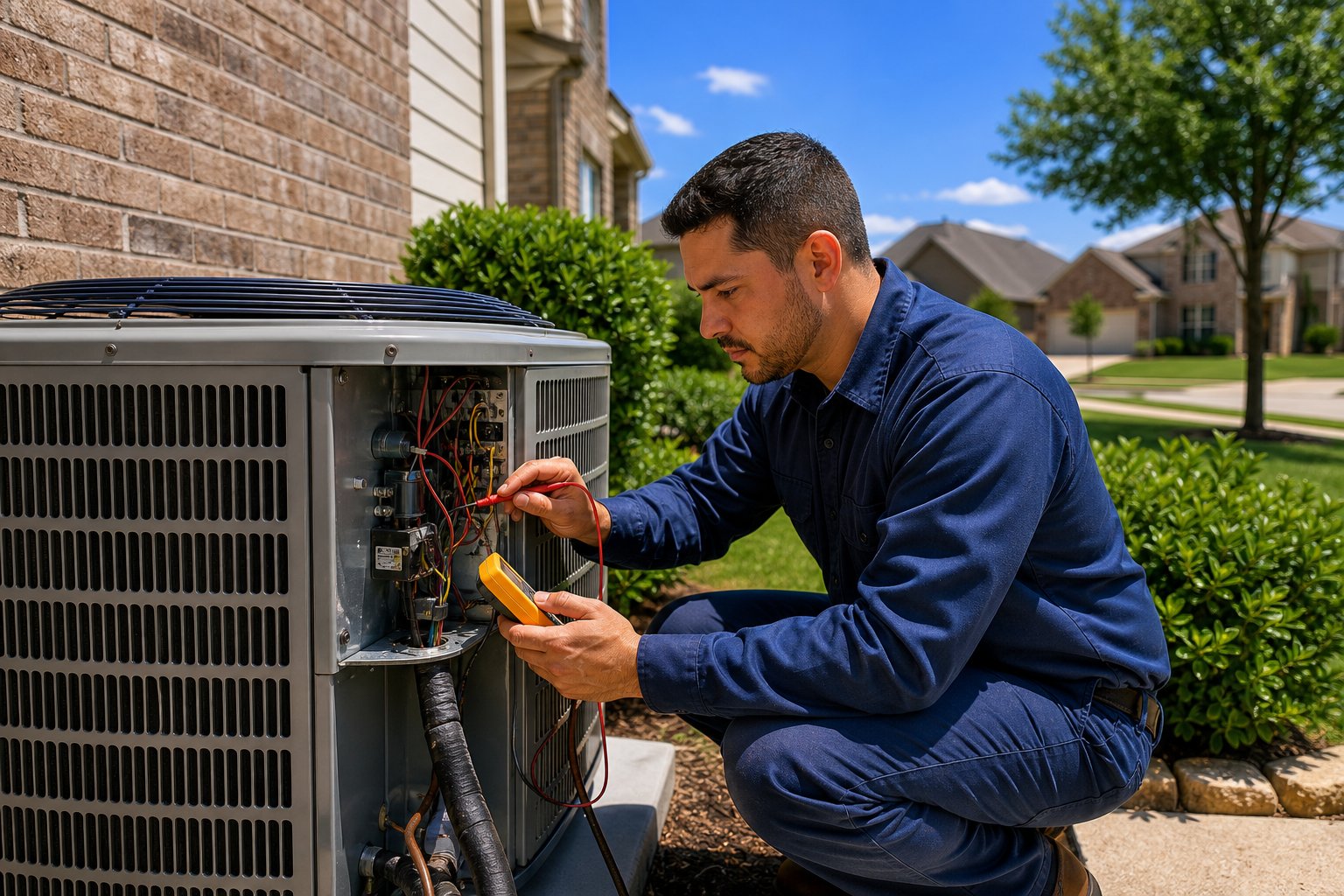
You can expect fast diagnostics, clear pricing, and repairs for both homes and businesses. Technicians inspect electrical systems, refrigerant levels, airflow, and controls so you know what parts or services you need.
Common Air Conditioning Issues and Diagnostics
You will often see weak airflow, warm air from vents, or unusual noises. Technicians check the air filter, blower motor, and ductwork first because these cause most airflow problems.
If the system blows warm air, they test refrigerant pressure and compressor function. Low refrigerant or a failing compressor are common causes and need certified handling.
Technicians use multimeters and gauge sets to find electrical faults and leaks. A certified HVAC technician may also check thermostat calibration and control board signals.
Ask if the crew includes NATE-certified technicians; that certification shows they can diagnose complex problems and recommend the right repair.
Emergency AC Repair and Fast Response
Your AC can fail on the hottest days, so choose a company that offers 24/7 emergency service and same-day visits. Response times matter; crews that arrive quickly reduce heat stress and interior humidity.
When you call, expect a clear arrival window, upfront pricing, and a basic on-site diagnosis before work begins.
Emergency technicians carry common parts for compressors, capacitors, contactors, and fan motors to complete many repairs in one visit. If a full replacement is needed, they explain options with costs and timelines.
Look for companies with local Arlington HVAC teams and positive customer service reviews to ensure reliable, timely help.
Solutions for Residential and Commercial Properties
You need different approaches for homes and businesses. For residential AC repair, technicians focus on system efficiency, quiet operation, and indoor comfort.
Services often include tune-ups, part replacement, and refrigerant recharge. Commercial HVAC services handle larger systems, rooftop units, and building controls.
Commercial technicians also check zoning, rooftop access, and safety compliance. An AC company serving both sectors should offer preventive maintenance plans for homes and service contracts for businesses.
Ask about duct sealing, programmable thermostats, and energy-efficient replacement systems to reduce operating costs for your property.
Importance of Timely Repairs
Delaying repairs raises the risk of larger failures and higher energy bills. Small issues like a worn capacitor or blocked coil can escalate to compressor failure if ignored.
Timely fixes extend equipment life and protect warranties that require maintenance records. Prompt repair also improves indoor air quality by preventing mold growth in clogged drains and ducts.
Good customer service teams keep maintenance logs and remind you of tune-ups, which helps preserve system efficiency. You should prioritize reputable Arlington HVAC companies with certified technicians and clear service records to protect your investment.
Expert AC and HVAC Installation
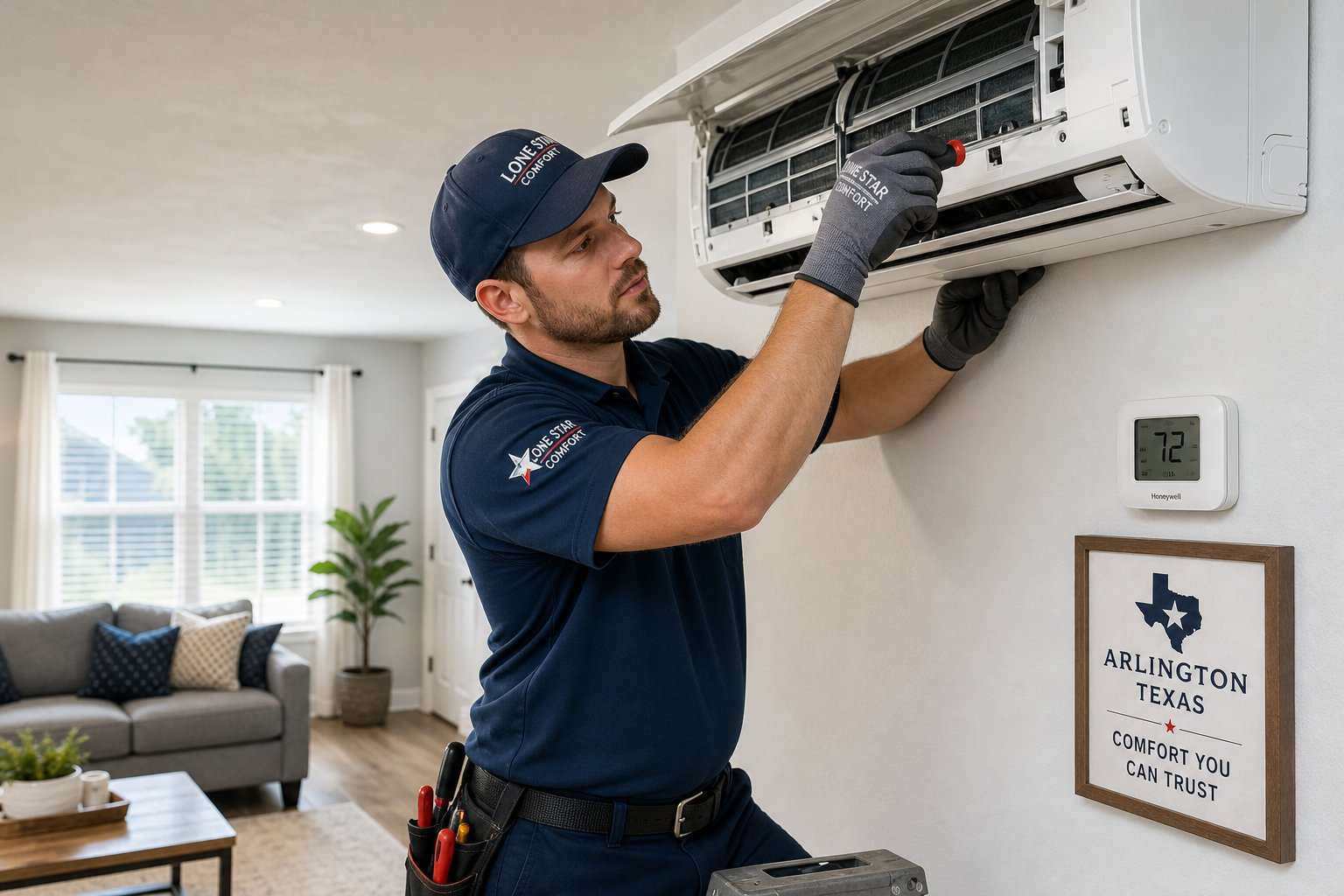
You will learn how to pick the right system, what happens during a professional installation, and what to expect for new construction projects. The focus is on system sizing, efficiency, permits, and the steps a licensed HVAC contractor follows to get your home cooling reliably.
Choosing the Right System for Your Needs
Start with a load calculation (Manual J) so your system matches your home’s size and insulation. A correctly sized unit reduces short-cycling, lowers energy use, and extends equipment life.
Ask an HVAC contractor for a written Manual J and Manual S to confirm capacity and recommended models. Compare SEER ratings for efficiency and look for systems with matched indoor and outdoor components.
Consider heat pumps if you want both heating and cooling in one system. If ductwork is limited, ask about mini-splits or ductless options.
Check refrigerant type and future serviceability. Choose an AC company that employs NATE-certified technicians for accurate sizing and safe refrigerant handling.
Get multiple written quotes that list brand, model, SEER, warranty, and installation details.
Efficient Air Conditioning Installation Process
A professional install follows a clear sequence: site prep, equipment delivery, duct and electrical checks, refrigerant line setup, and system startup. Technicians verify line lengths, insulation, and refrigerant charge to meet manufacturer specs.
Proper brazing and leak testing prevent future failures. Expect electrical work: a dedicated circuit, disconnect box, and correct breaker sizing.
If ducts are used, crews seal and test them to ensure balanced airflow. Installers will set the outdoor unit on a pad and secure the indoor coil in the air handler or furnace cabinet.
After mechanical work, technicians perform a startup and calibration: measure superheat/subcooling, confirm airflow (CFM), and set thermostat controls. They record readings and leave a copy of test results.
Ask for documentation of warranty registration and maintenance recommendations.
HVAC Installation for New Construction
In new builds, coordinate early with your builder and HVAC contractor to place equipment, duct runs, and return grills. Early planning avoids costly changes later and ensures proper airflow paths.
Provide floor plans and ceiling heights for accurate load calculations. Duct design should use Manual D to size runs and minimize static pressure.
Require metal ducts or lined flex with proper insulation and sealed joints. Demand a commissioning checklist that covers air balance, equipment sequencing, and thermostat zoning where needed.
Confirm permits and inspections are scheduled with the local jurisdiction. Use installers who work with builders regularly and who provide clear change orders.
NATE-certified technicians bring consistent installation practices and can train builders on simple maintenance points for homeowners.
What to Expect During Installation
You should expect a timeline, typically 4–8 hours for a simple AC swap and 1–3 days for full HVAC installs. The crew will protect floors, disconnect power, and remove old equipment if included.
Ask them to show identification and a company card before work starts. During the process, technicians will test for refrigerant leaks, verify airflow across the coil, and measure temperature split between supply and return.
They will also check thermostat wiring and program initial settings. Expect final walkthrough where they explain filters, maintenance schedule, and warranty terms.
Get all agreements in writing: model numbers, SEER, labor warranty length, and expected completion date. If permits are required, confirm who pulls them.
Keep the contact for your HVAC contractor handy for follow-ups or seasonal tune-ups.
Routine Maintenance and Preventive Care
Routine care keeps your AC running efficiently, lowers repair risks, and extends system life. Regular checks focus on filter changes, refrigerant levels, coil cleaning, and electrical safety so you avoid sudden breakdowns and high energy bills.
Benefits of AC Maintenance Plans
An AC maintenance plan gives you scheduled tune-ups, priority service, and set pricing for inspections. You get two seasonal visits—spring for cooling and fall for heating—that include filter checks, refrigerant measurement, and a system performance test.
Plans often include discounts on parts and labor, which can lower the cost of common repairs. You also get quicker response times during Arlington heat spikes because plan holders usually receive priority dispatch from their HVAC technician.
Keep records through the plan; technicians log refrigerant pressure, amperage, and airflow. That history helps spot slow failures before they force an emergency repair.
If you want predictable costs and fewer service interruptions, an AC maintenance plan helps.
Essential Air Conditioning Maintenance Tasks
Change or clean air filters every 1–3 months to maintain airflow and indoor air quality. Replace disposable filters or wash reusable ones; dirty filters make the compressor run harder and raise energy use.
Inspect and clean evaporator and condenser coils each year. Remove debris from the outdoor unit and straighten bent fins.
Check refrigerant charge against manufacturer specs; low charge often signals a leak that needs repair. Test electrical components and tighten connections to prevent shorts and failures.
Lubricate moving parts, check the thermostat calibration, and measure system airflow and temperature split. Keep the area around the outdoor unit clear of plants and clutter for proper airflow.
Signs Your HVAC Needs Professional Attention
Watch for reduced cooling, rising energy bills, or warm spots in rooms—these often mean airflow problems or a low refrigerant charge. Listen for grinding, hissing, or rattling noises that suggest failing bearings, leaks, or loose components.
If your system cycles on and off frequently, trips breakers, or shows excessive humidity indoors, call an HVAC technician. Also schedule service if the unit has visible frost on the coils or a strong chemical or burning smell.
Document symptoms and when they occur to help the technician diagnose faster. Quick action can prevent compressor failure, which is often the most expensive repair.
For local service options, consider companies that offer preventive maintenance and same-day repairs in Arlington, TX, such as Cool Tech Mechanical for scheduled maintenance or Air Worth for brand-specific service.
Professional Standards and Customer Experience
Good service means clear communication, skilled technicians, and honest pricing. Expect fast response times, routine maintenance plans, and warranties that protect your home and equipment.
Qualities of Top HVAC Companies in Arlington
You should pick an AC company that responds quickly and treats your home with care. Look for contractors who offer same-day or next-day emergency repairs, carry proof of insurance, and provide written estimates before work begins.
Good companies show up on time, wear uniforms, and leave your space clean after service. They keep records of past visits and send reminders for seasonal tune-ups.
Customer service matters: you want staff who answer calls, explain repairs in plain language, and follow up after service. Read local reviews on sites like Yelp to confirm consistent, polite service and reliable results.
The Role of Licensed and NATE-Certified Technicians
You deserve technicians with formal credentials and hands-on training. Licensed HVAC contractors meet state requirements for safety and code compliance in Arlington.
NATE-certified technicians have passed industry exams that show they know modern systems, refrigerants, and diagnostics. Technicians with these credentials diagnose issues faster and reduce repeat visits.
They can explain exactly which parts need repair or replacement and why. Ask any company for proof of license and NATE certification before work starts.
Certified techs also follow EPA rules for refrigerant handling, protecting both your unit and the environment.
Transparent Pricing and Financing Options
You should get a clear, written price before work begins. Top companies list labor, parts, and taxes separately and explain why a specific repair or replacement is needed.
Look for contractors who offer itemized estimates, flat-rate repair options, and a written warranty on parts and labor. Some AC companies in Arlington provide financing or payment plans that let you spread the cost of a new system over months.
If a contractor offers a maintenance plan, read the terms for priority service, discounts, and included tune-ups. Transparent pricing and clear financing help you compare bids and avoid surprise charges.
Special Services for Businesses and Homes
You can expect focused solutions for both business and home HVAC needs.
The section covers reliable commercial work, tailored heating and air systems, and indoor air quality plus duct services that reduce costs and improve comfort.
Commercial HVAC Solutions
You get planned maintenance and emergency repair for retail stores, offices, and multifamily properties.
Technicians perform rooftop unit inspections, condenser and compressor diagnostics, refrigerant leak checks, and scheduled coil cleaning to keep systems running through Arlington summers.
For larger sites, crews handle zone controls, programmable thermostats, and preventive replacement schedules to lower downtime.
You can ask for service agreements that include priority dispatch, seasonal tune-ups, and documented safety checks.
If your building needs a system upgrade, contractors size equipment to match peak cooling loads and indoor occupancy.
They also test electrical connections, airflow balance, and refrigerant charge so the new or repaired system meets performance and efficiency goals.
Custom Heating and Air Conditioning Systems
You receive a system designed for your exact space, not a one-size-fits-all install.
An HVAC contractor will measure square footage, insulation levels, window exposure, and typical occupancy before recommending heat pumps, furnaces, or split systems.
Options include high-efficiency units, two-stage compressors, and variable-speed blowers.
These choices cut energy bills and keep temperatures steady.
Technicians also plan layouts for ductwork, condensate lines, and clear access for service.
During installation, crews handle permits, electrical hookups, and startup testing.
They document airflow (CFM), static pressures, and thermostat calibration so you know the system meets specs.
Ask about financing or special offers from local providers to ease upfront costs.
Advanced Indoor Air Quality and Duct Services
You can improve air quality with targeted services: UV germicidal lamps, HEPA filtration upgrades, humidity control, and MERV-rated filter installations.
Technicians perform particle testing and advise on filtration levels that match allergies or respiratory concerns.
Duct services include full cleaning, sealing leaks with mastic, and adding insulation to reduce energy loss.
Properly sealed and balanced ducts improve airflow and comfort while cutting wasted energy.
For homes and businesses, providers may offer IAQ assessments and follow-up reports showing particle counts and humidity levels.
Find local commercial and residential HVAC contractors, maintenance plans, and emergency repair options by checking reputable Arlington providers such as Texas Air & Heat for neighborhood services and offers: Texas Air & Heat.
Frequently Asked Questions
You will find clear answers about repair costs, emergency service, repair vs replacement decisions, the “$5,000 rule,” available financial help, and expected system lifespan in North Texas.
Each answer gives specific steps or numbers you can use to decide what to do next.
How much does HVAC repair typically cost in Arlington, Texas?
Minor repairs like capacitor or thermostat fixes often run $100–$400.
Mid-level work such as refrigerant recharge or motor repair typically costs $400–$1,200.
Major jobs like compressor replacement or a new condenser can range from $1,200 to $4,500, depending on parts and labor.
Get an upfront written estimate before any work starts.
Do you offer 24/7 emergency HVAC repair service in Arlington?
Many local companies provide 24/7 emergency service and same-day response in Arlington.
Some providers advertise typical response times of about 35–50 minutes.
Call the company and confirm after-hours rates, technician licensing, and estimated arrival time before you authorize service.
How can I tell whether my HVAC system needs repair or full replacement?
If repairs are occasional, short, and cost under a few hundred dollars, repair usually makes sense.
If you face frequent breakdowns, poor cooling despite repairs, or odd noises and smells, replacement may be better.
A technician should inspect refrigerant levels, compressor condition, coil cleanliness, and airflow.
If repair costs approach half of a new system’s price or efficiency remains low, plan for replacement.
What does the $5,000 rule mean when deciding to repair or replace an HVAC system?
The $5,000 rule says: if a repair will cost more than $5,000, replace the system instead.
This rule helps when systems are older or repair costs are very high.
Compare the repair cost to replacement quotes and factor in efficiency gains and expected future repairs.
Are there rebates, financing options, or assistance programs in Texas that can help pay for HVAC replacement?
You can often get utility rebates or manufacturer rebates for high-efficiency equipment.
Check local utility programs and the ENERGY STAR database for qualifying units.
Many HVAC companies offer financing plans or low-interest loans.
Also search county or state weatherization and energy-assistance programs for income-based help.
What is the average life expectancy of an HVAC system in North Texas, and what factors shorten it?
Typical central air systems last 12–15 years in North Texas. Heat pumps often last about 10–15 years.
High humidity, poor maintenance, dirty filters, and frequent short-cycle operation shorten life expectancy. Regular tune-ups, coil cleaning, and timely filter changes help extend system life.