You need a dependable HVAC contractor in Arlington, TX who fixes problems fast and keeps your home comfortable year-round.
Hire a licensed, local technician who offers clear pricing, fast response, and routine maintenance to avoid expensive breakdowns.
You’ll learn how to pick contractors who match your budget and system needs, what services to expect, and how pros in Arlington handle repairs, installs, and tune-ups for peak performance.
The details will help you decide quickly and confidently when your AC or heater needs work.
Key Takeaways
- Choose a licensed local contractor with transparent pricing and quick response.
- Expect repairs, installations, and scheduled maintenance to protect your system.
- Look for technicians who tailor solutions to your home and offer clear communication.
Selecting the Right HVAC Contractor in Arlington
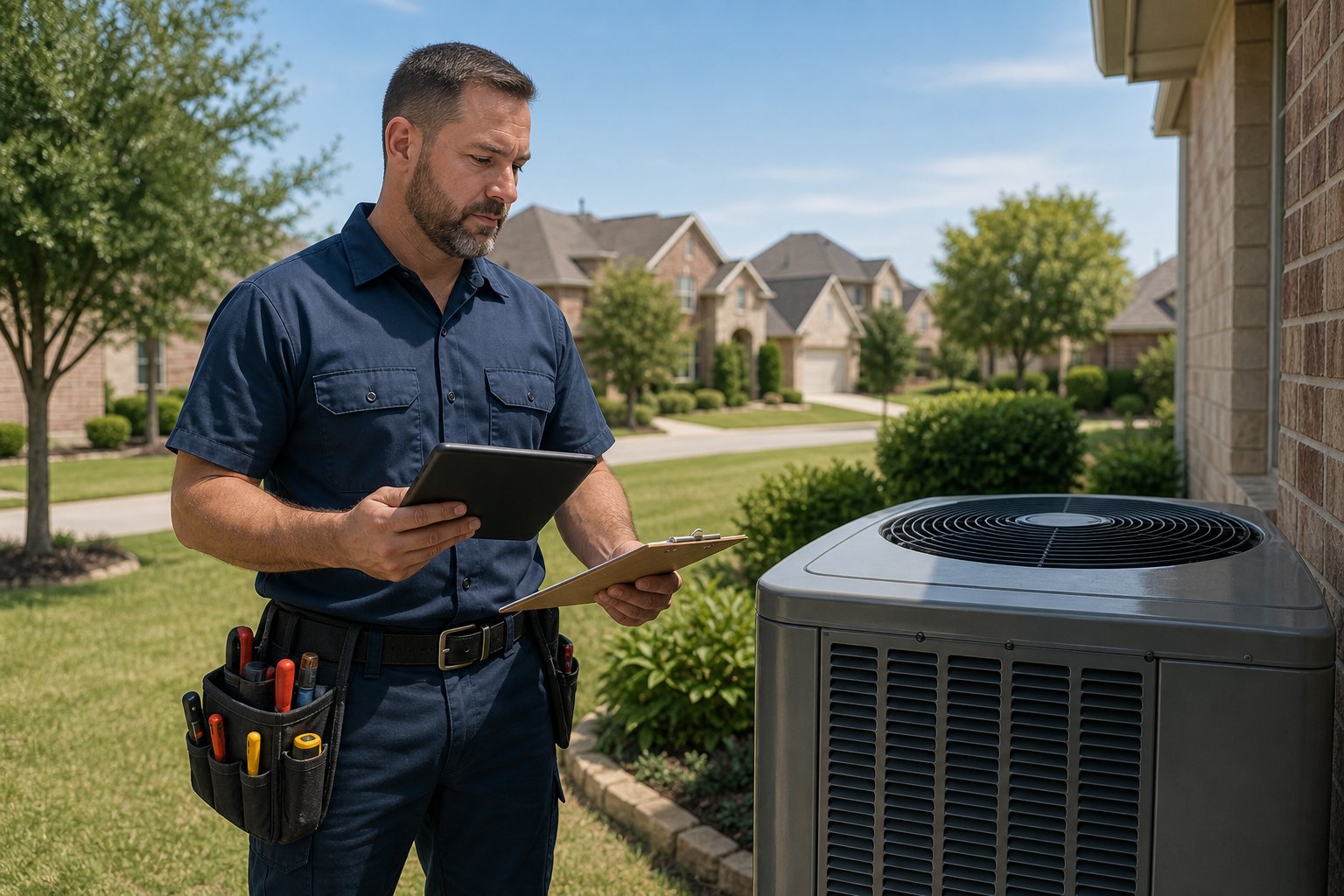
You need a contractor who is experienced, licensed, and trusted by other Arlington homeowners.
Focus on measurable qualifications, verified credentials, and real customer feedback to make a safe choice.
Key Qualifications to Look For
Look for an HVAC contractor with at least 5 years of experience working on split systems, heat pumps, and ductwork in Arlington homes.
Ask for model-specific experience if you have a high-efficiency or variable-speed system.
Confirm they offer written estimates that list parts, labor, and expected timelines.
Check whether the company provides a clear warranty for parts and labor and whether they perform a diagnostic before giving a final price.
Prefer contractors who use EPA-certified technicians for refrigerant work and who carry manufacturer training for your system brand.
Request references from recent Arlington installations and follow up.
Importance of Licensing and Insurance
Verify the contractor holds a Texas HVAC license or local Arlington registration when required.
Licensing shows they met state education and testing standards for safety and code compliance.
Ask to see the license number and check it online when possible.
Insurance protects you if a worker is injured on your property or if damage occurs during service.
Require proof of general liability and workers’ compensation insurance.
If a company cannot provide certificates from their insurer, consider other Arlington HVAC firms that can.
Evaluating Reviews from Arlington Homeowners
Read reviews on local pages and national listings to see patterns in punctuality, cleanup, and problem resolution.
Pay attention to recent reviews about summer AC repairs and winter heating service in Arlington neighborhoods.
One-off complaints happen; repeated mentions of poor communication or hidden fees are red flags.
Contact a few references directly and ask about timeliness, whether the final price matched the estimate, and if any follow-up service was needed.
Combine online ratings with direct reference calls to get a clearer sense of how the contractor treats Arlington homeowners.
Essential HVAC Services Offered in Arlington
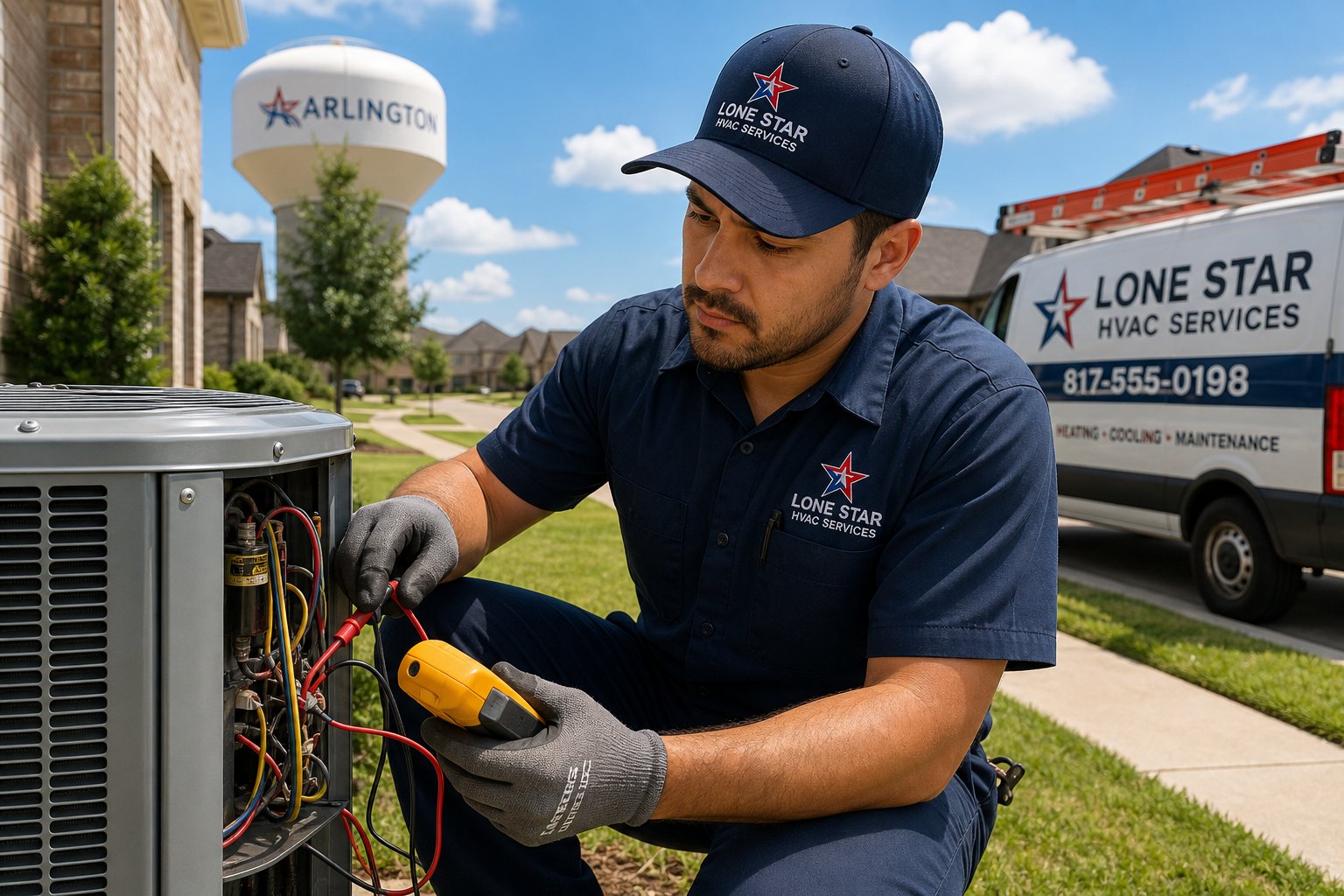
You can expect fast, practical solutions that keep your home comfortable through hot summers and cooler winters.
Technicians focus on repairs, new system installs, and heating work that match Arlington’s climate and common home setups.
Comprehensive AC Repair
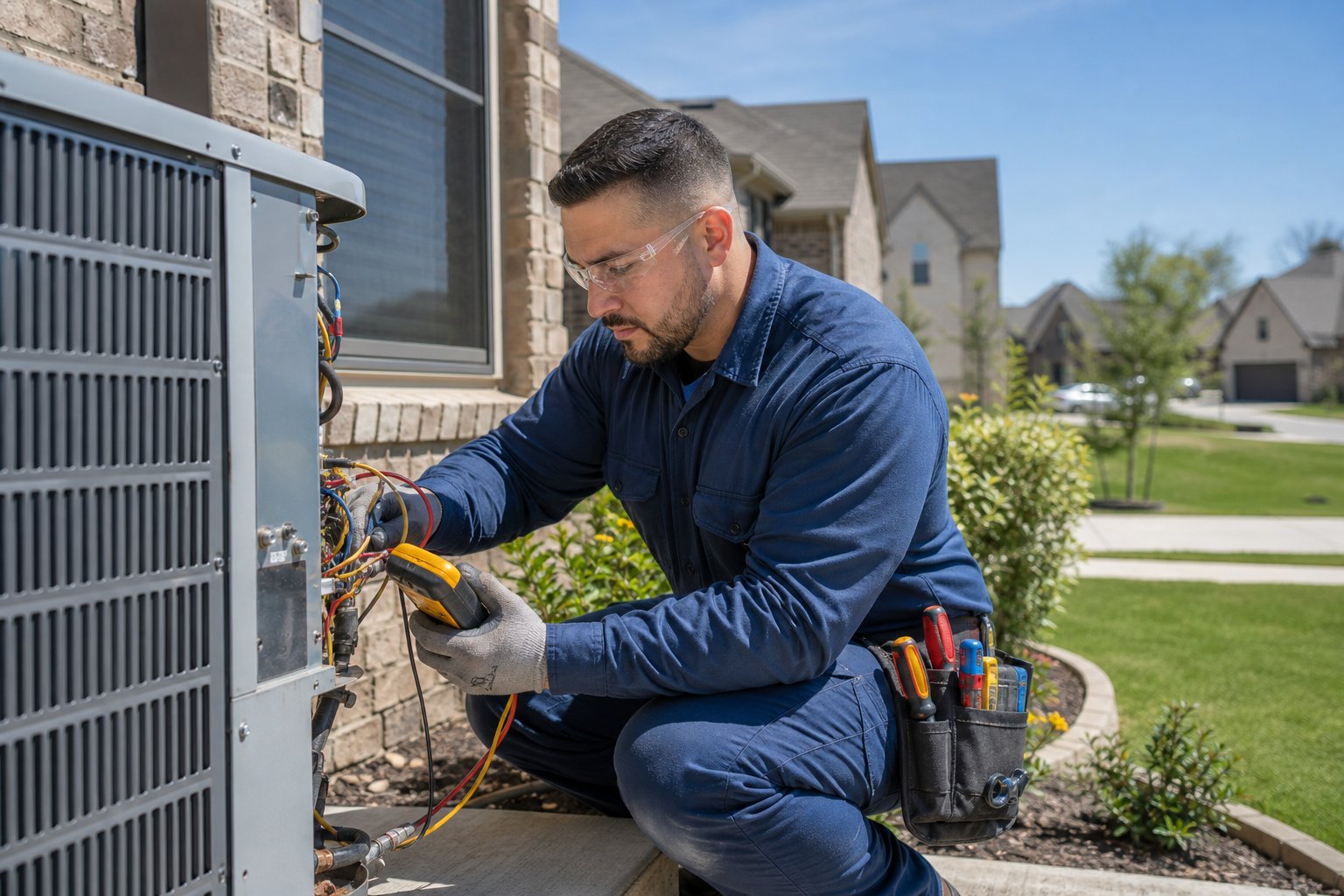
When your AC stops cooling or cycles too often, technicians begin with a full diagnosis of the refrigerant charge, compressor function, airflow, and electrical connections.
They check filters, coils, and the thermostat, then present clear options: a targeted repair, a major component replacement, or a cost-based recommendation for a new system.
Repairs commonly include fixing refrigerant leaks, replacing capacitors or contactors, cleaning or straightening coils, and repairing duct or blower issues.
Technicians use manufacturer parts when possible and document the work and estimated remaining life of your unit.
Expect transparent pricing and a written estimate before work starts.
If you need same-day service during a heat wave, ask about emergency or priority repair windows.
Professional AC Installation
A correct air conditioning installation begins with a load calculation for your home to size the system by square footage, insulation, sun exposure, and ceiling height.
Proper sizing prevents short cycling and keeps energy use lower.
Installers handle refrigerant line matching, correct duct connections, system charging, and thermostat setup.
They follow local code and manufacturer guidelines and test the system under full load before leaving.
You should get a written checklist showing matched refrigerant type, static pressure readings, and startup temperatures.
Financing and brand options are offered by many Arlington contractors.
Ask about energy-efficiency ratings (SEER), expected seasonal performance, and warranty coverage for compressor and parts.
Complete Heating Services
Heating work covers furnace repair, heat pump service, and pre-season tune-ups to ensure safe, efficient operation.
Technicians inspect burners, heat exchangers, gas valves, ignition systems, and safety controls to reduce carbon monoxide risk.
Common heating services include thermostat calibration, pilot or ignition repairs, zone control checks, and blower motor replacements.
For heat pumps, expect refrigerant checks and reversing valve inspections to maintain both heat and cooling performance.
You’ll receive a clear repair estimate and maintenance plan.
Regular heating tune-ups extend system life, improve efficiency, and lower the chance of emergency breakdowns during a cold snap.
How Arlington AC & Heating Experts Ensure Optimal Performance
You get reliable comfort, lower bills, and fewer breakdowns when technicians follow proven service steps, respond fast to emergencies, and recommend sensible upgrades.
The next lines explain the exact work they do to keep systems running well.
Routine Maintenance Benefits
You receive a clear checklist during each tune-up that shows what technicians inspect and adjust.
Arlington AC & Heating technicians check refrigerant charge, clean coils, replace or clean filters, tighten electrical connections, and measure airflow.
They also test safety controls and thermostat calibration so your system runs safely and accurately.
Routine visits reduce wear on parts and lower energy use.
When technicians spot a weak capacitor, worn belt, or blocked drain early, they replace it before it causes a compressor failure.
You get written findings and estimated repair costs, which helps you plan spending and compare options without pressure.
Technicians log service history for your home so future visits focus on recurring issues.
That record speeds diagnosis and protects your warranty when repair or replacement becomes necessary.
Handling Emergency Repairs
You need a fast, clear response when cooling or heating fails.
Arlington AC & Heating offers same-day service and prioritizes calls that affect elderly or medically vulnerable household members.
A dispatcher gives an ETA and technician details so you know when help arrives.
On-site, the tech runs a focused diagnostic: system voltages, compressor start current, and refrigerant pressures.
They explain the root cause in plain language, show you failed parts, and present one repair option and one replacement estimate when appropriate.
If the fix requires a part order, they offer a temporary solution to restore partial function when safe.
Technicians arrive stocked with common parts—capacitors, contactors, run capacitors, and filters—so many repairs finish the same visit.
You receive a written invoice showing labor, parts, and any warranty on the repair work.
Upgrading Outdated Systems
You should weigh efficiency gains and long-term costs when your unit is older than 10–15 years.
Arlington HVAC specialists evaluate system size, duct condition, and insulation before recommending options.
They use load calculations to size new equipment, avoiding oversized or undersized units that waste energy or shorten service life.
They explain differences in SEER ratings, two-stage compressors, variable-speed blowers, and compatible thermostats so you can pick what matters: lower bills, quieter operation, or better humidity control.
Arlington AC & Heating can show projected annual energy savings and a simple payback estimate for each option.
Install teams follow manufacturer specs and seal ducts, set proper refrigerant charge, and run performance tests at the end.
You get installation warranties and a checklist showing what was adjusted, which helps protect performance and your investment.
Tailored Solutions for Arlington Homeowners
You will learn how contractors fit systems to your house layout and cut energy waste with local climate and code in mind.
The focus is on practical choices for your rooms, ductwork, and seasonal bills.
Matching Systems to Home Layouts
Look for an HVAC contractor who inspects your home’s footprint, attic, and duct paths before quoting.
They should perform a Manual J load calculation so the air conditioning installation matches your actual cooling needs, not just the square footage.
That prevents oversized units that short-cycle and undersized systems that run constantly.
If you have an older Arlington house with small ducts, the contractor might recommend a high-efficiency split system or a zoned mini‑split to avoid full duct replacement.
For multi-level homes, zoning with multiple thermostats keeps upstairs and downstairs comfortable without blasting the whole house.
Ask about placement: outdoor condenser clearances, attic air handler access, and line-set routing matter for future serviceability.
Energy Efficiency Considerations
Prioritize equipment with a high SEER rating for air conditioning installation to reduce summer bills in Arlington’s heat.
Also compare AFUE or HSPF ratings for heating services if you use a furnace or heat pump.
A contractor should show expected seasonal savings, not just sticker ratings.
Insulation, attic ventilation, and properly sealed ductwork often save more energy than a small jump in unit SEER.
Request an estimate that includes duct sealing, thermostat upgrades (programmable or smart), and rebate-eligible models.
Check local utility rebates and permit needs; experienced Arlington contractors often handle rebate paperwork and ensure installs meet city code.
What Sets Top Arlington HVAC Companies Apart
Top Arlington HVAC companies earn your trust by showing clear skills, honest pricing, and care for local needs.
You should expect licensed technicians, timely service, and written guarantees that protect your home and equipment.
Experience and Community Trust
You want technicians who know Arlington weather and common system issues.
Look for an HVAC contractor with years of local work and many recent reviews on sites like Yelp or the Better Business Bureau.
Experienced techs spot recurring problems fast, such as refrigerant leaks, clogged coils, or poor airflow, and they explain fixes in plain language.
Check for team members with manufacturer certifications for brands like Trane or Lennox.
These credentials mean the contractor can service your specific system.
Also verify local business longevity and neighborhood referrals—neighbors often tell the truth about punctuality and cleanup.
Transparent Pricing and Warranties
You deserve clear, written estimates before any work begins.
Top Arlington AC & Heating companies list labor, parts, permit fees, and options for repairs or replacements.
Ask for itemized quotes and a timeline so you know when the job starts and ends.
Warranties matter: get both manufacturer parts coverage and the contractor’s labor warranty in writing.
Good companies explain what voids a warranty and offer maintenance plans to keep coverage valid.
If a dealer offers financing, ask for rates and total cost up front so there are no surprises.
For more guidance on choosing a provider, check local contractor listings and reviews from Arlington hubs like the Better Business Bureau.
Frequently Asked Questions
This section answers practical questions about hiring, evaluating, and deciding on HVAC work in Arlington.
Expect clear guidance on choosing contractors, reading reviews, typical labor costs in the DFW area, and simple rules to weigh repair vs. replacement.
How do I choose a reliable heating and cooling company for my home in Arlington?
Check for a valid Texas HVAC license and local city registration.
Ask for proof of insurance, written estimates, and manufacturer certifications for the equipment they install.
Request recent references and photos of similar jobs.
Verify response time for emergencies and whether they offer maintenance plans and written warranties.
Compare at least three itemized bids before deciding.
Look for clear breakdowns of parts, labor, and any permits so you can compare apples to apples.
What should I look for when reading HVAC company reviews and ratings?
Focus on recent reviews from the last 12 months to see current performance. Note comments about punctuality, communication, and cleanup after the job.
Watch for repeated complaints about upselling or unexplained charges. Positive reviews should mention accurate estimates and follow-up service.
Cross-check reviews with professional listings and local complaints to confirm consistency. Patterns matter more than one-off bad reviews.
How much does an HVAC technician typically charge per hour in the DFW area?
Hourly rates vary by experience and task, and by company size and call type. In the DFW area, expect technician rates commonly between $75 and $150 per hour for service calls and repairs.
Emergency or after-hours visits usually add a premium. Always ask for a diagnostic fee and whether it applies to the repair cost if you proceed.
What does the $5,000 rule for HVAC repair vs. replacement mean, and when should I use it?
The $5,000 rule says if repair costs approach half the system’s replacement value or exceed about $5,000, replacement often makes more sense. Use it when repairs are major or the system is older than 10–12 years.
Factor in remaining expected life, energy savings from a new unit, available rebates, and installation quality.
What is the 20 rule for HVAC systems, and how does it affect replacement decisions?
The 20 rule suggests replacing a system when repair costs would be 20% or more of the system’s value in a short period. Apply it when a major component fails and the system is near the end of its expected life.
Use this rule alongside age, efficiency, and repair frequency.
What is the difference between a mechanical contractor and an HVAC contractor?
An HVAC contractor focuses on heating, ventilation, and air conditioning systems. This includes installation, maintenance, and repair.
They typically hold HVAC-specific licenses and certifications.
A mechanical contractor works on a broader range of mechanical systems such as plumbing, piping, boilers, and industrial equipment.
Their scope can include HVAC but often covers larger-scale mechanical projects.