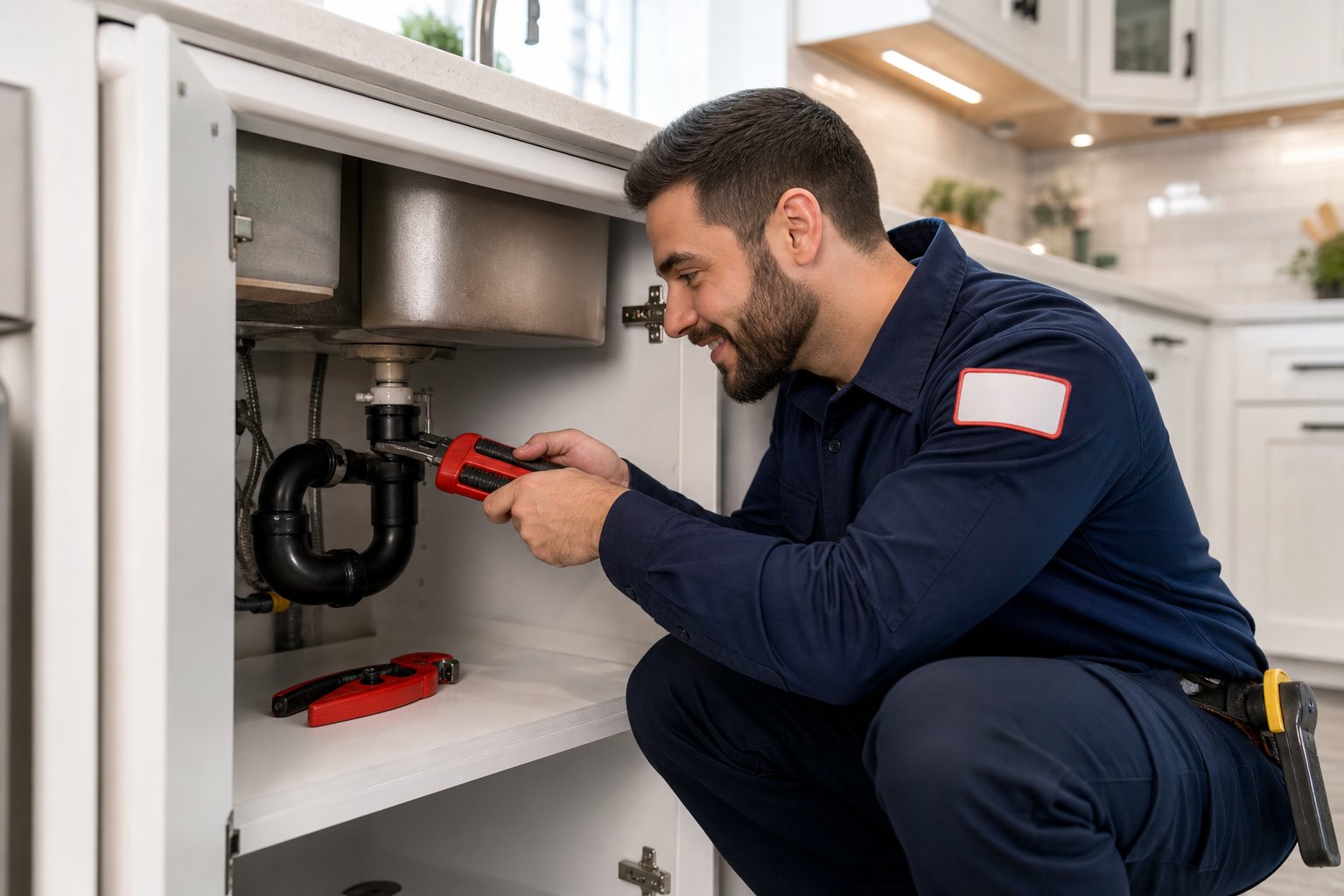
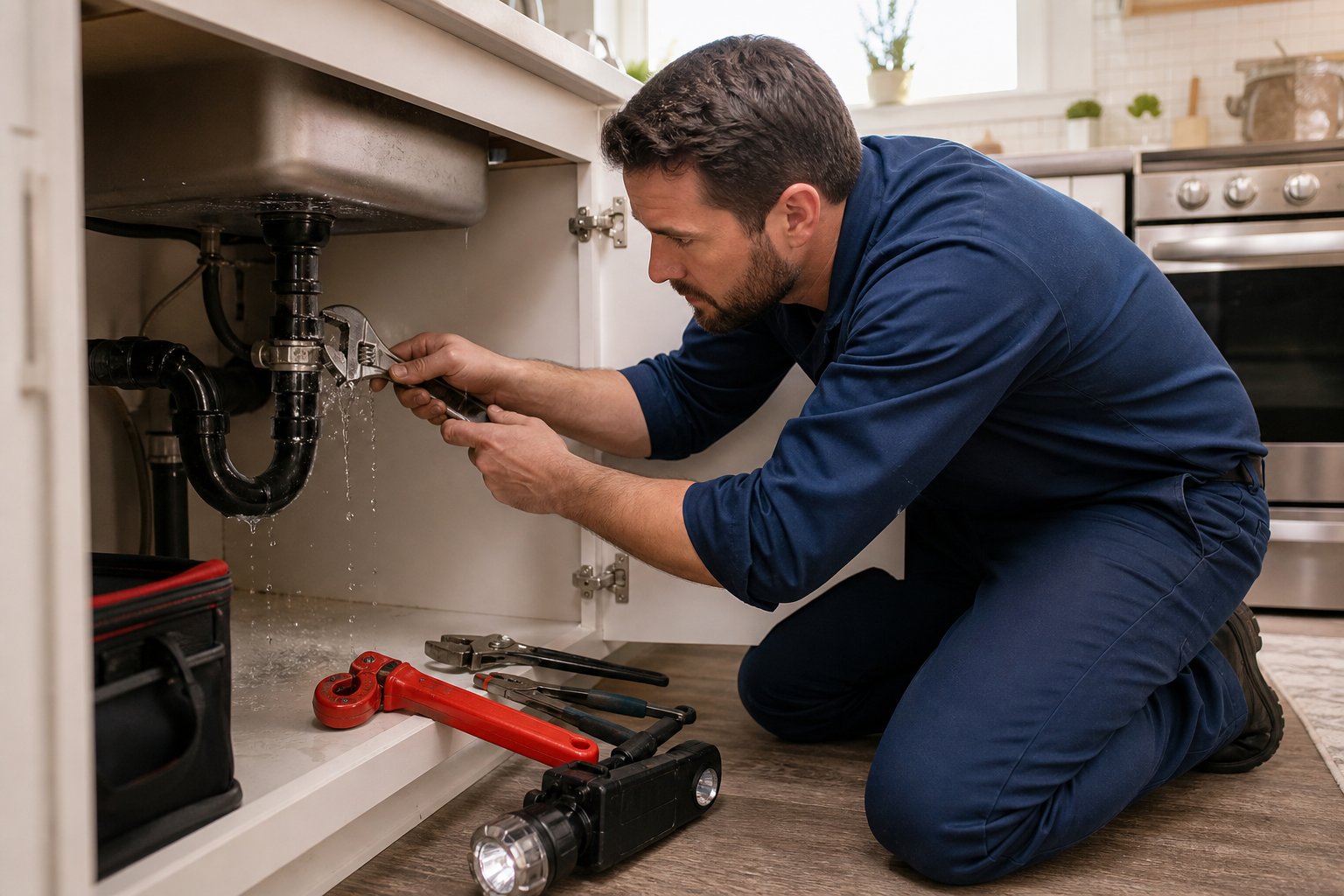
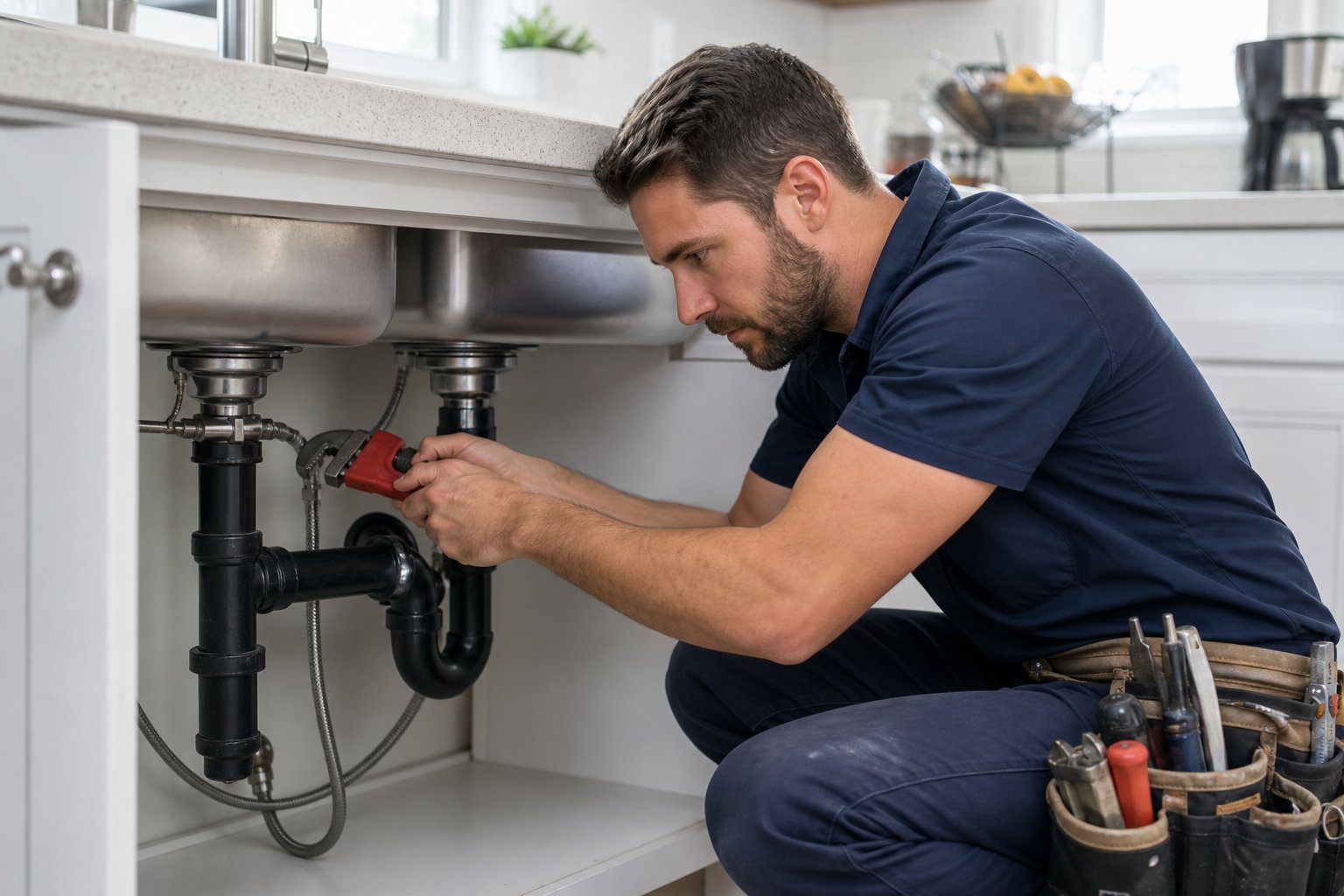
You want your home comfortable now, not later. When your AC or heater acts up in North Richland Hills, you need clear steps, quick fixes you can try, and a reliable way to get fast, professional help without guessing.
You can get dependable HVAC repair in North Richland Hills that fixes the problem quickly and keeps your system running efficiently.
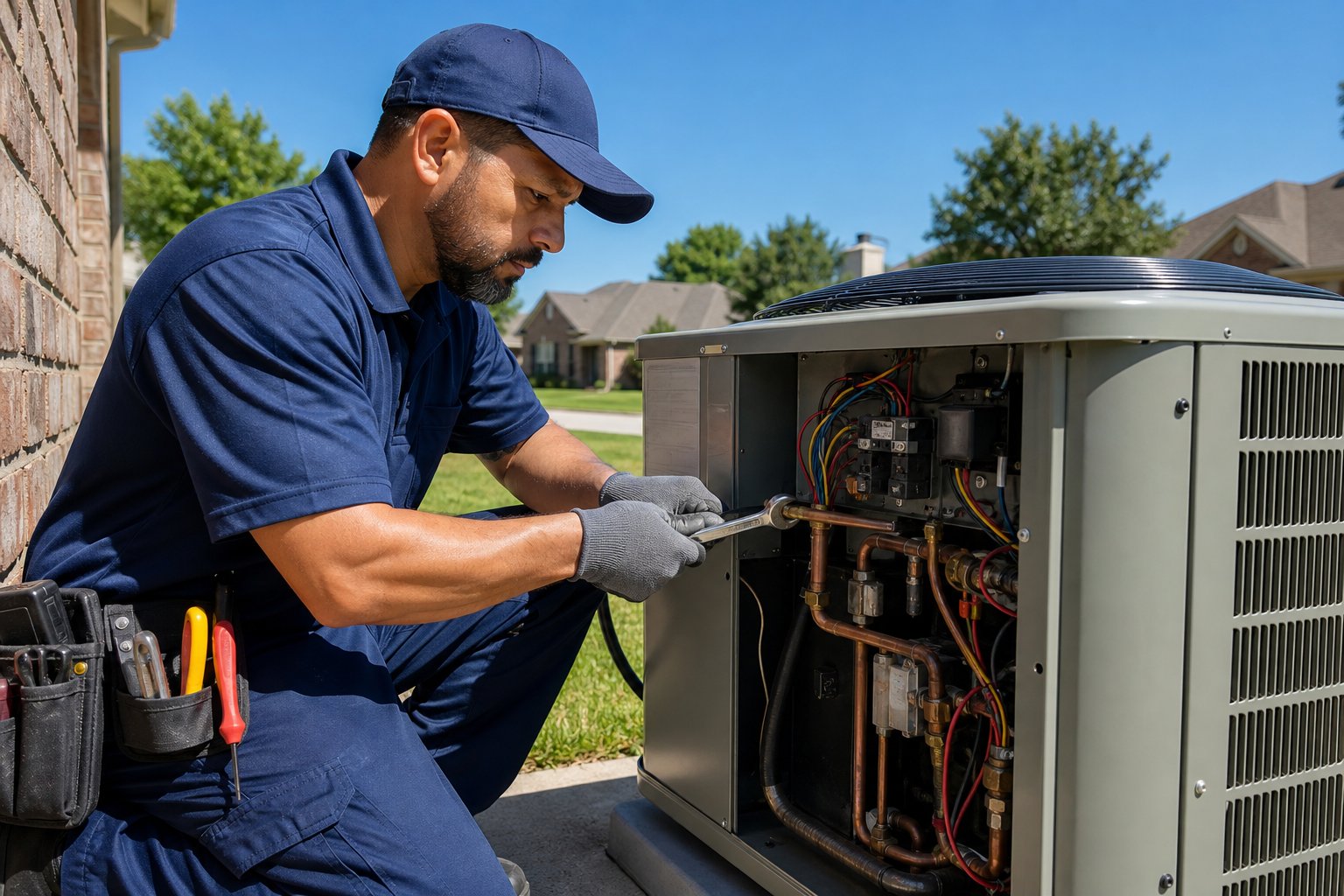
This post shows what to expect from local HVAC teams, how to spot common air conditioning and heating issues, and when to call a pro to avoid bigger bills. You’ll learn how good customer service and fast response times make repairs less stressful and how basic maintenance can cut down emergency visits.
Key Takeaways
- Learn clear signs that your HVAC needs repair so you can act fast.
- Expect fast response and straightforward service from local HVAC pros.
- Regular tune-ups and smart fixes help avoid costly breakdowns.
Comprehensive HVAC Repair Services
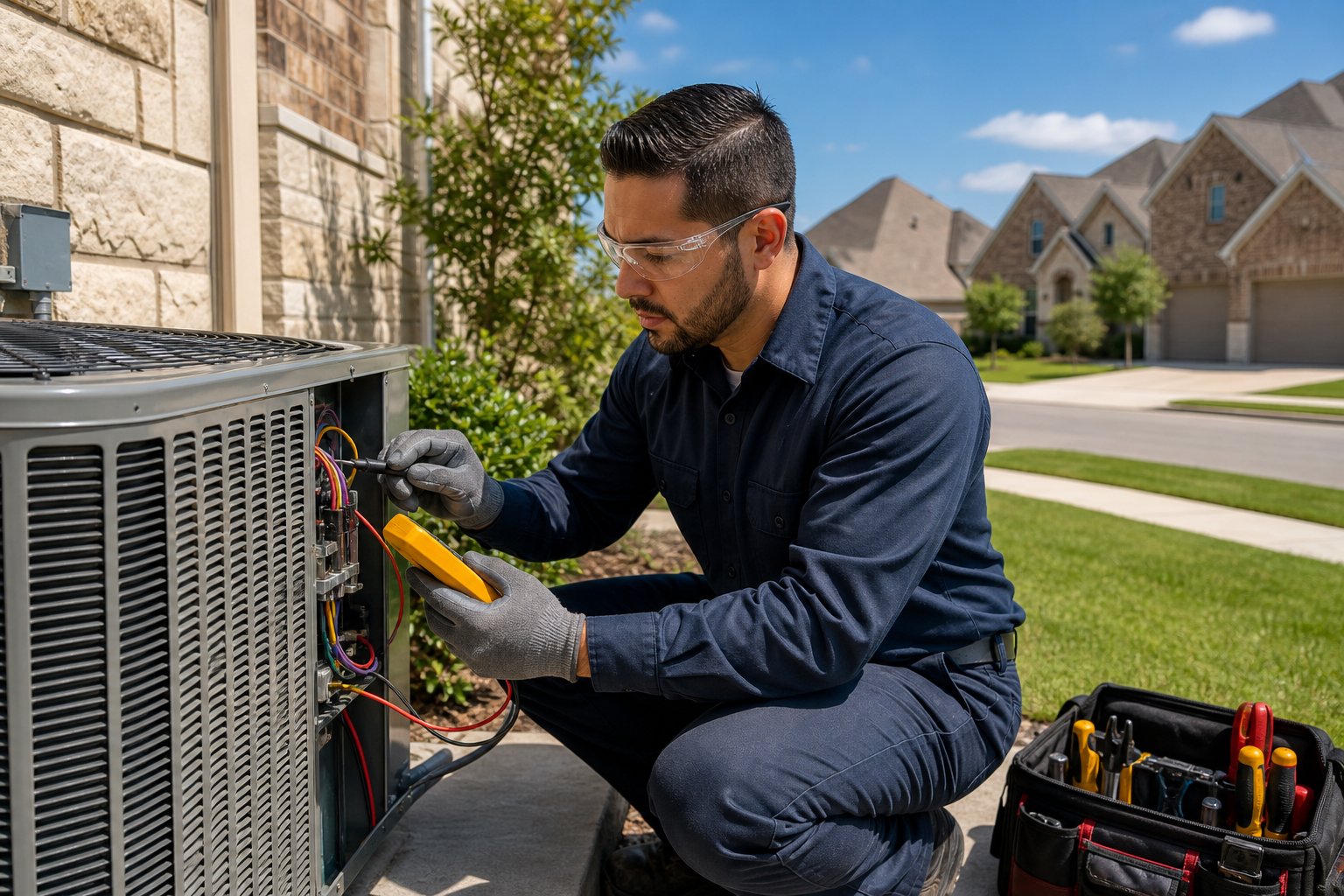
You get thorough repairs for residential and commercial systems, fast emergency response, and precise diagnostics that aim to restore comfort and lower energy use.
Technicians handle air conditioning, heating, ductwork, and controls with parts and procedures matched to your system.
Emergency Service Availability
When your AC or furnace fails, you can call for 24/7 emergency HVAC service that prioritizes urgent calls. Expect triage on the phone, dispatch of a licensed tech, and options for temporary fixes to restore cooling or heat the same day.
Fast response times matter in North Richland Hills summers, so crews often carry common replacement parts—capacitors, contactors, thermostats, and refrigerant lines—to avoid repeat trips.
You should ask about guaranteed arrival windows and after-hours rates before you book. For commercial HVAC outages, crews can stage temporary cooling (portable units or bypass loops) to protect equipment, employees, or customers while full repairs proceed.
Common HVAC Issues and Solutions
You will most often see poor airflow, refrigerant leaks, faulty thermostats, and short cycling. Technicians start with airflow checks—filter condition, blower motor function, and duct leaks—because restoring airflow fixes many comfort problems.
For AC repair in North Richland Hills, they test refrigerant pressure, inspect coils for blockage or corrosion, and repair or replace leaking lines. Certified techs follow EPA rules when handling refrigerant.
Electrical failures like bad capacitors or relays cause no-cool calls; those parts are typically swapped quickly. For commercial HVAC systems, motor bearings, control boards, and belt drives are common failure points and often repaired on site to reduce downtime.
Advanced Diagnostics and Same-Day Repairs
Technicians use digital manifold gauges, clamp meters, and combustion analyzers to find root causes instead of guessing. This reduces repeat visits and lets you see measured results like pressures, amperage, and temperature split.
Many companies offer same-day repairs when parts are on the truck. Ask if the tech carries OEM or high-quality aftermarket parts, and whether labor warranties cover the work.
For complex commercial controls or variable-speed equipment, techs may load manufacturer software or run system calibration to restore efficiency. You should request a written estimate that lists parts, labor, and projected completion so you know the timeline and cost before work begins.
Air Conditioning & Heating Solutions

You can expect clear steps to fix, replace, or maintain your HVAC so your home stays comfortable year-round.
Focus stays on fast diagnosis, proper sizing, and reliable parts that cut energy use and reduce breakdowns.
Air Conditioning Repair Expertise
When your AC blows warm air or cycles on and off, start with a professional diagnosis that checks refrigerant levels, compressor function, and airflow. Technicians test temperature splits across the evaporator coil and measure amp draw on the compressor to spot electrical or mechanical problems.
Common repairs include recharging refrigerant, replacing capacitors or contactors, and cleaning or replacing coils and filters. You should get a written estimate that lists parts, labor, and a time frame.
Ask about warranties on parts and labor and whether technicians are NATE-certified or background-checked. If your unit is older than 10–12 years, weigh repair costs against replacement.
Regular ac maintenance, such as seasonal tune-ups, reduces emergency calls and keeps efficiency high. For local help, check reviews and availability for 24/7 service in North Richland Hills before scheduling.
AC Installation and Replacement
Proper AC installation starts with load calculation to size the unit for your home’s square footage, insulation, and sun exposure. Installers should confirm line set length, duct condition, and correct refrigerant charge to match the manufacturer’s specifications.
You should expect replacement options including high-efficiency condensing units and matched air handlers or heat pumps. Request an itemized quote showing system SEER rating, expected annual energy savings, and any rebates.
Insist on proper refrigerant handling and a final performance test that shows supply/return temperature differentials. Ask if installers will inspect and seal ducts, replace thermostats, and remove the old unit.
Choose a contractor who provides a clear warranty, a maintenance plan, and references from North Richland Hills customers.
Heating and Furnace Repair
When your furnace fails to heat or cycles irregularly, technicians will inspect the ignition system, heat exchanger, and blower motor first. They will check for gas line leaks, adequate airflow, and correct venting to prevent safety hazards like carbon monoxide.
Common furnace repairs include replacing igniters, cleaning burners, fixing limit switches, and lubricating motors. You should receive a diagnosis that separates urgent safety fixes from non-urgent efficiency repairs.
Ask for a cost estimate and a timeline before work starts. For heating installation, match furnace capacity to your home’s heat load and choose high AFUE ratings for long-term savings.
Routine heating service and filter changes extend equipment life and keep indoor air healthy. Consider a combined service plan that covers both your heating and ac maintenance for year-round reliability.
Relevant local services and providers can assist with any of these tasks, including emergency repairs and seasonal maintenance in North Richland Hills.
Professional HVAC System Installation
Proper installation reduces breakdowns, cuts energy bills, and matches equipment to your space.
You should expect accurate load calculations, correct duct sizing, and clear pricing that can include financing options for bigger projects.
Residential HVAC Installation
You get a system sized to your home using a Manual J load calculation. This step sets the correct AC installation and heating installation capacity so the unit runs efficiently and avoids short cycling.
Technicians should inspect ductwork, insulation, and attic ventilation before quoting replacement or new equipment. Expect a written estimate that lists unit model, SEER or AFUE ratings, permit costs, and labor.
Ask about financing options if the upfront price is high; many local contractors offer payment plans or 0% financing for approved buyers. During installation, installers will set a level pad or roof curb, mount the condenser, connect refrigerant lines, and test airflow and refrigerant charge.
Post-install checks include thermostat calibration, condensate drain setup, and demonstration of system controls so you know how to operate and maintain your new HVAC.
Commercial System Upgrades
For commercial HVAC, you need a full site survey and often a zone-based design. Larger buildings require rooftop units, packaged systems, or VRF setups tied to building management systems (BMS).
Your contractor should map supply and return layouts, make recommendations for VAV or constant-volume systems, and plan for service access and duct insulation. Upgrade bids should show energy savings estimates, projected payback period, and any utility rebates.
Heating installation in commercial spaces may include boiler ties or economizers for rooftop units to improve efficiency. Coordinate installation timing to minimize business disruption; many contractors offer phased installs and weekend or night work.
Verify the proposal includes start-up tests, controls integration, and operator training so your staff can run the system safely and efficiently.
Choosing Energy-Efficient Equipment
Choose equipment based on seasonal efficiency and real-world performance. For cooling, look for higher SEER ratings; for heating, check AFUE for furnaces and HSPF for heat pumps.
Also consider variable-speed compressors and ECM blower motors that lower run-time and improve humidity control. Compare lifetime operating cost, not just purchase price.
Ask contractors to provide modeled annual energy use for your specific building and local climate. Seek units eligible for rebates or tax credits and confirm eligibility before purchase.
Insist on proper refrigerant charge, matched indoor coil, and duct sealing during installation—these factors affect the efficiency you actually get. Financing options can make higher-efficiency systems more affordable and shorten the payback period.
Preventative Maintenance & Tune-Ups
Regular care keeps your system efficient, reduces breakdowns, and lowers energy costs. You will get clearer indoor air, longer equipment life, and fewer surprise repairs when you maintain both cooling and heating systems.
Routine AC and Heating Maintenance
You should schedule an annual HVAC maintenance visit for both your air conditioner and furnace. A technician will clean coils, check refrigerant levels, and measure blower motor amps for the AC.
For the heating side, they inspect burners, test safety controls, and check heat exchanger condition. Do these basic tasks each visit:
- Replace or clean filters.
- Tighten electrical connections and test capacitors.
- Clear and flush condensate drains and pans.
Write down technician findings and any recommended repairs. Tracking refrigerant pressure, capacitor health, and airflow numbers helps you spot decline before failure.
If you want, enroll in a local maintenance plan to get reminders and priority service.
Benefits of Preventative Maintenance Plans
A preventative maintenance plan bundles scheduled tune-ups, priority dispatch, and discounted repairs. You save on emergency call fees and get faster service during peak Texas heat.
Plans usually include two tune-ups per year, parts inspection, and documented results. That keeps warranties valid for many manufacturers and proves routine service if a component fails.
You also gain consistent baseline measurements—temperature split, refrigerant pressure, and amp draw—so technicians can spot drifting performance. Look for plans with clear pricing, written checklists, and background-checked technicians.
Many North Richland Hills providers offer enrollment online and seasonal reminders to simplify upkeep.
Seasonal Preparation and Inspections
Before summer, have your cooling system tuned: clean the outdoor coil, test the condenser fan, and verify thermostat calibration. Technicians will run the compressor and check startup amp draw to avoid high-load failures on hot days.
Before winter, inspect the furnace and ductwork. Technicians check pilot or ignition systems, test limit switches, and inspect the heat exchanger for cracks.
They will also assess insulation and seal duct leaks to improve heat delivery. Schedule inspections at least a month before extremes hit.
That timing gives technicians room to order parts and complete repairs before demand surges. For local options on tune-ups and maintenance, compare offerings from reputable HVAC service providers in North Richland Hills such as Elite Air of Texas or other regional companies.
Indoor Air Quality & Duct Services
You can improve home comfort and lower allergy triggers by fixing dirty ducts, adding targeted air cleaners, and keeping vents and filters serviced. Proper duct work and air-quality upgrades cut dust, mold spores, and pet dander that make systems work harder and raise energy use.
Duct Cleaning for Healthy Air
Duct cleaning removes dust, pet hair, mold spores, and debris that collect in supply and return ducts. If you notice visible dust blowing from vents, persistent odors, or higher allergy symptoms after running the system, schedule a professional cleaning.
Technicians use negative-pressure vacuums and rotary brushes to dislodge and extract buildup without pushing contaminants into living spaces. Ask technicians to inspect and seal any loose duct joints and to check insulation on ducts in attics or crawlspaces.
Sealing reduces air leaks that lower system efficiency and let unfiltered attic air enter your home. Keep a record of when cleaning and sealing occur so you can plan follow-up maintenance every 3–7 years depending on pets, renovations, and local dust levels.
Indoor Air Quality Solutions
You should match IAQ solutions to specific problems: high pollen and dust, mold odors, or asthma triggers.
For pollen and dust, use high-MERV filters and a stand-alone HEPA air cleaner in bedrooms.
For mold or persistent musty smells, have a pro check for moisture sources.
Clean the drain pan and coils during HVAC maintenance to stop regrowth.
Control humidity with a dehumidifier if indoor levels exceed 50%.
Lower humidity reduces dust mite and mold growth and makes your system cool more efficiently.
Also consider UV lights near the coil to limit microbial growth.
They work best combined with regular coil cleaning during HVAC maintenance visits.
Advanced Air Filtration and Controls
Upgrade filters based on your system’s blower capacity: many residential systems handle MERV 8–13.
Higher MERV ratings capture smaller particles but can reduce airflow if the blower isn’t strong enough.
Check your HVAC manual or ask a technician before installing a dense filter.
Whole-home electronic air cleaners and true HEPA in-line systems offer higher capture rates for smoke and fine particles.
Smart thermostats and zoned dampers paired with pressure-monitored filters help you monitor filter life and keep airflow balanced.
When you install advanced filtration, plan more frequent filter checks and document performance changes during routine HVAC maintenance.
For local service options in North Richland Hills, you can find companies that handle duct cleaning, IAQ testing, and filtration upgrades to match your home’s needs.
Customer Experience and Service Guarantees
You will learn how technicians handle your calls, payment choices, and what protections you get after work finishes.
Expect clear timelines, money-back or repair promises, and options to fit tight budgets.
Commitment to Exceptional Customer Service
You get direct access to licensed technicians who answer calls quickly and explain diagnostics in plain language.
Companies serving North Richland Hills often offer same-day or next-day fast response times for common AC breakdowns.
When you call, you should receive an estimated arrival window and a price range before the tech begins work.
Technicians should show ID, wear company uniforms, and protect your flooring and furniture.
You should receive a written estimate that lists parts, labor, and warranty terms.
If a job uncovers extra issues, the tech should pause work and get your signed approval before continuing.
Customer service also covers clear communication after the visit.
You should get instructions for simple maintenance, a summary of repairs performed, and contact info for follow-up.
Reliable companies log your service history so future visits go faster and you avoid repeated fixes.
Flexible Financing Options
You should find multiple payment routes: credit/debit, financing plans, and sometimes short-term no-interest offers for new AC installs.
Many local HVAC firms partner with lenders to offer fixed monthly payments and terms from 6 to 84 months depending on loan size.
Ask for the annual percentage rate (APR), total finance charges, and any fees before you sign.
Look for programs that let you pay a deposit and defer the balance until after installation.
Some plans include prequalification that won’t affect your credit score.
Also check for utility rebates or local incentives that reduce costs for high-efficiency air conditioning services; the tech or office staff can help you apply.
Make sure all financing details appear in writing: payment schedule, late fees, early payoff terms, and who owns warranty responsibility if a financed system is returned or replaced.
You should get a copy of the finance agreement the same day as the work.
Satisfaction Guarantees and Aftercare
You should receive clear warranties on parts and labor—common terms include 1-year labor and 5-10 year parts coverage depending on the component.
Verify whether warranties require professional installation and regular maintenance to remain valid.
Keep service receipts and the technician’s checklist for claims.
If repairs don’t fix the problem, reputable companies offer a repair-or-refund promise or a free revisit within a set period, often 30 to 90 days.
Confirm response time for warranty callbacks; faster service windows matter during heat waves when your air conditioning services are critical.
Aftercare often includes optional maintenance plans with seasonal tune-ups, priority scheduling, and discounts on future repairs.
These plans help keep warranties valid and improve system lifespan.
Ask how to enroll, what inspections are performed, and whether diagnostic fees are waived for members.
Frequently Asked Questions
This section gives clear, specific answers you can use when hiring, troubleshooting, or budgeting for HVAC service in North Richland Hills.
It covers how to vet contractors, likely causes of poor cooling, typical repair price ranges, and rules that help decide repair vs. replacement.
How do I choose a reliable HVAC contractor for my home?
Verify the contractor’s TACLA license at the Texas Department of Licensing and Regulation website before you call.
Ask for the license number, proof of insurance, and any manufacturer dealer or NATE certifications.
Get a written, itemized estimate that includes parts, labor, warranty, and diagnostic fees.
Compare at least two estimates and check recent online reviews for timely responses and warranty fulfillment.
Confirm emergency availability and response times for summer heat.
Ask how technicians are paid — flat-rate or hourly-pay models reduce upsell pressure compared with heavy commission pay.
What are the most common causes of an air conditioner not cooling properly?
Low refrigerant from a leak reduces cooling capacity and can damage the compressor.
A dirty condenser coil or restricted airflow from clogged filters and blocked vents also cuts performance.
Electrical issues like a failed capacitor or contactor can stop the outdoor unit from running.
A failing compressor or faulty thermostat will show as poor cooling and usually need professional diagnosis.
How much does a typical AC or furnace repair cost, and what affects the price?
Minor AC repairs like capacitor or contactor replacement commonly run $150–$450.
Mid-range jobs such as blower motor work or coil cleaning typically cost $450–$1,200.
Major repairs like compressor replacement often start around $1,500 and can exceed $4,000.
System age, parts availability, refrigerant type (R-22 vs. R-410A), brand, and job accessibility all affect price.
Diagnostic fees ($75–$150) are common and are often applied to the final repair if you approve the work.
When should I repair my HVAC system versus replace it using the $5,000 rule?
If the quoted repair approaches or exceeds $5,000 and your system is older than 10 years, replacement usually makes more sense.
A repair under $5,000 on a relatively new system (under 10 years) often is the better short-term option.
Also weigh expected future repairs, energy savings from a new higher-efficiency unit, and available warranties.
If a single repair costs more than half the price of a new system, replacement is often the smarter long-term choice.
What is the 20-year rule for HVAC systems, and how does it impact replacement decisions?
The 20-year rule says systems near or beyond 20 years should be replaced rather than repaired.
Components are likely to fail more often after two decades, and modern systems run much more efficiently.
If your system is 15–20 years old, expect increased repair frequency and reduced efficiency.
Plan replacement before complete failure to avoid emergency costs and take advantage of newer efficiency standards.
Are there Texas programs, rebates, or financing options that help pay for HVAC replacement?
Check local utility rebate programs and manufacturer promotions for discounts on high-efficiency units.
Some utility companies and municipalities in Texas offer rebates for ENERGY STAR or high-SEER systems.
Ask HVAC companies about financing plans or deferred-payment options that spread the cost over months or years.
Verify program details and eligibility before you sign any financing or rebate paperwork.