A water leak in your yard can waste hundreds of gallons of water each month and drive up your utility bill before you even realize it. These leaks often hide underground, out of sight, while they slowly damage your property and erode soil.
The good news? You can track down these hidden leaks using simple methods that don’t require fancy equipment. It’s not as complicated as it might seem.
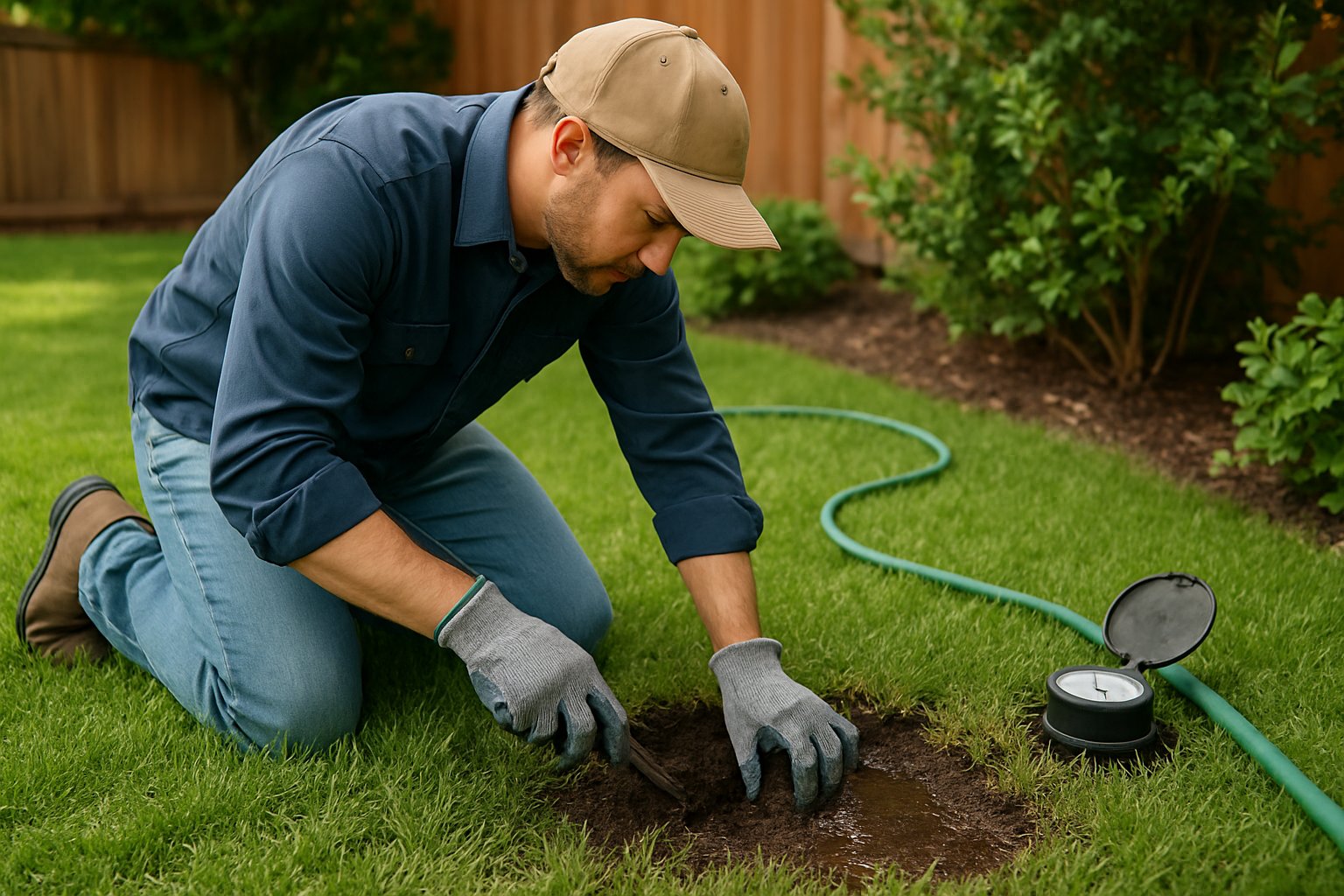
To find a water leak in your yard, start by turning off all water-using devices in your home and checking your water meter—if the meter reading changes after 30 minutes to an hour with everything off, you have a leak that’s likely outside. This basic test will confirm whether you need to search your yard or if the problem is actually inside your home.
Once you know there’s a yard leak, there are a few techniques to help pinpoint its location. Look for wet soil, extra green patches of grass, and other visible clues that point to underground pipe problems.
We’ll also talk about when you might handle the repair yourself—and when it’s just smarter to call a pro.
Key Takeaways
- Check your water meter with all fixtures off to confirm you have an outdoor leak
- Look for visual signs like soggy spots, unusually green grass, or pooling water in your yard
- Call a professional plumber if you can’t locate the leak or if it requires digging near utility lines
Understanding Water Leaks in Your Yard
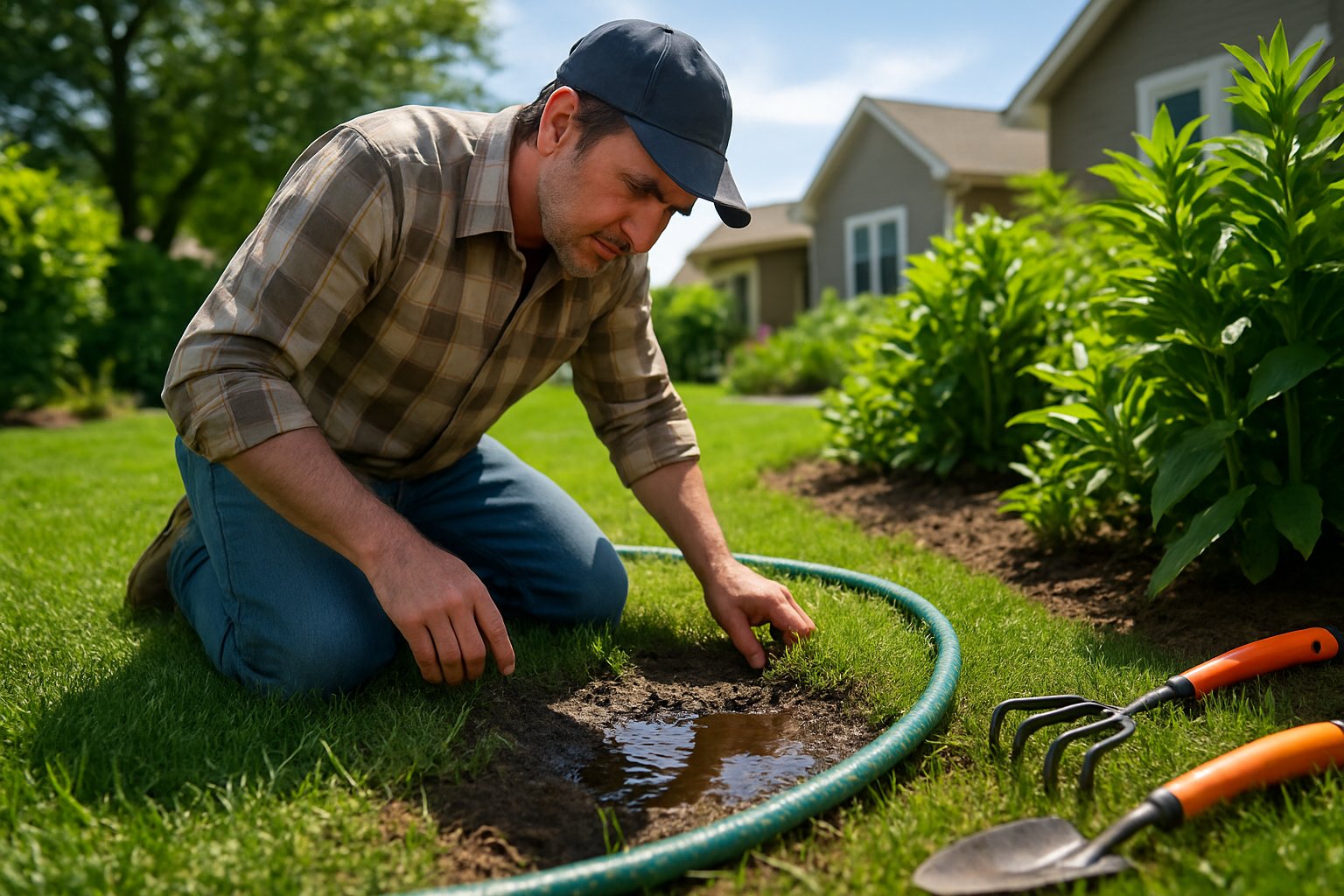
Water leaks in your yard happen when pipes break or connections fail underground. They can waste thousands of gallons before you notice them.
These leaks affect your property differently than indoor plumbing problems. They’re harder to spot but just as important to fix.
Common Causes of Yard Water Leaks
Yard water leaks happen for several reasons. The most common cause is aging pipes that crack or corrode over time, especially old galvanized steel or clay pipes.
Tree roots are another big problem. As trees grow, their roots spread out and can wrap around pipes or push through weak spots, causing underground water leaks.
Extreme temperature changes also damage pipes. When water freezes inside during winter, it expands and can crack the pipe walls.
Ground shifting from settling soil or earthquakes puts pressure on pipes and breaks them at connection points. Poor installation or low-quality materials lead to early failures too.
If plumbing joints weren’t sealed properly or pipes weren’t buried deep enough, they’re more likely to develop leaks in just a few years.
Impact of Water Leaks on Your Property
Water leaks cause real damage to your yard and home. The most obvious impact? A higher water bill each month as gallons leak into the ground.
Your lawn shows signs of trouble too. Soggy patches where grass stays wet even when it hasn’t rained stand out. Sometimes, one area of grass looks much greener and healthier than the rest because it’s getting extra water.
The soil itself becomes unstable when water saturates it all the time. This can lead to erosion around your home’s foundation or even create sinkholes in severe cases.
Standing water attracts mosquitoes and other pests. Water leaks can also contaminate your water supply if dirty groundwater gets pulled back into broken pipes. You might notice rust, dirt, or air bubbles coming from your faucets.
Differences Between Yard and Indoor Leaks
Yard leaks are much harder to find than indoor plumbing leaks. When a pipe leaks inside, water shows up on floors or walls right away.
Underground leaks stay hidden until they cause visible problems above ground. The repair process is different too. Indoor leaks are easier to access through walls or under sinks, while yard leaks require digging and maybe calling 811 to avoid hitting other utility lines.
Water pressure drops affect each type differently. Indoor leaks usually cause pressure problems in certain rooms, but yard leaks reduce pressure throughout the whole house because the main line is compromised.
Detection methods aren’t the same either. You can usually spot indoor leaks by listening for drips or checking visible pipes. Finding yard leaks means checking the water meter, looking for wet spots, or hiring professionals with special equipment.
Early Signs You Might Have a Yard Water Leak
Water leaks in your yard often show warning signs before they become big problems. You can spot these issues by watching for changes in your lawn, tracking water usage, and paying attention to how your plumbing works.
Unexplained Puddles and Wet Soil
One of the clearest signs of a water leak is finding wet or soggy patches in your lawn that don’t match the rest of the yard. These areas stay damp even when you haven’t watered or it hasn’t rained.
Unexplained puddles appear in random spots and stick around longer than normal. The wet soil happens when underground pipes leak and saturate the ground above them.
You might notice these wet areas feel spongy when you walk on them. The size of the wet patch often tells you how bad the leak is.
Small damp spots might mean a minor leak just started. Large soggy areas usually mean the leak has been going on for a while or is more severe.
Sudden Changes in Water Pressure
A drop in water pressure throughout your home points to a leak somewhere in your system. Showers might feel weaker or faucets don’t flow as strongly as they used to.
The pressure drop can happen gradually as a leak gets worse, or suddenly if a pipe breaks all at once. Either way, lower pressure means water is escaping before it reaches your fixtures.
Check if all your faucets and showers have the same pressure drop. If the whole house is affected, the leak is probably in your main water line or yard pipes.
Higher Water Bills and Water Meter Readings
An unexpected increase in your water bill is often the first clue you have a leak. You can check your water meter to confirm this by turning off all water-using devices in your home.
Write down the meter reading and wait 30 minutes to an hour. If the reading changed even though you didn’t use any water, you have a leak somewhere.
This simple test works because the meter keeps tracking water that flows through your system. Your bill might go up slowly each month or jump suddenly.
Make sure the increase comes from higher usage, not rate changes from the water company.
Sinkholes and Unusual Greenery
Extra green grass in one area while the rest of your lawn looks normal can mean that spot is getting extra water from a leak. The grass there grows faster and looks healthier because it receives constant moisture.
Sinkholes can form when a bad leak runs for a long time and washes away soil underneath. These depressions in your yard clearly show where the leak is located.
While sinkholes are rare, they mean you have a serious problem that needs attention now. Look for areas where plants thrive while nearby sections struggle. This contrast in vegetation health often points right to the leak location.
Pinpointing the Water Leak Location
Once you confirm a leak exists, you need to narrow down its exact location to avoid unnecessary digging and repair costs. Start by checking visible fixtures, then use your water meter readings and look for physical clues in the yard.
Inspecting Irrigation Systems and Fixtures
Begin by examining all visible water sources in your front yard and around the property. Check each sprinkler head in the irrigation system for cracks, breaks, or constant dripping.
Look at hose connections, outdoor faucets, and spigots for leaks or wet areas around their base. Walk the entire length of any above-ground irrigation lines and feel along pipe connections and joints for moisture or loose fittings.
Turn on the irrigation system and watch each zone run through its cycle to spot any unusual spray patterns or water pooling. Check valve boxes by lifting the covers and looking inside for standing water.
If you find water in a valve box when the system isn’t running, there’s likely a leak in that zone. Pay attention to any hissing sounds near valves, which can mean water is escaping under pressure.
Checking Plumbing Lines and Fittings
Your main water line runs from the street meter to your house, and leaks can happen anywhere along this path. Find the water meter and trace a line to where the pipe enters the home.
Most underground water leaks occur in the main water line beneath driveways or landscaping. Inspect any exposed pipe sections in crawl spaces, basements, or along the foundation.
Feel connections and joints for dampness. Check where pipes connect to the house for rust stains or mineral deposits, which signal slow leaks.
Look at pipe fittings near the water meter and at the house connection point. These areas experience the most stress and wear.
If you recently had plumbing work done, check those repair locations first since new connections can sometimes develop problems.
Using the Water Meter to Confirm a Leak
Use your water meter to verify a leak exists and estimate how bad it is. First, locate the water meter and write down the current reading.
Turn off all water-using appliances inside and outside the house, including ice makers and water softeners. Wait 30 minutes to an hour without using any water. Check the meter reading again.
If the numbers changed, you have a leak somewhere on your property. The amount of change tells you how bad the leak is.
A small movement means a slow leak, while significant changes mean a major problem. You can also watch the leak indicator on the meter, usually a small triangle or wheel that spins when water flows through the system.
Surface Clues Versus Underground Leaks
Surface leaks show obvious signs you can spot during a visual inspection. Look for soggy patches in the lawn, areas where grass grows much greener than surrounding spots, or places where puddles form without rain.
These indicate water reaching the surface from below. Underground leaks are trickier but leave subtle clues.
Check for sunken areas or small depressions in the yard where soil has eroded underneath. Look for cracks in pavement or driveways that weren’t there before.
Listen for running water sounds in quiet moments. Put your ear near the ground in suspected areas to hear water moving through pipes or bubbling up through soil.
Notice any areas where the ground feels warm, as water from hot water lines can heat the surrounding earth. You might see dirt or rust particles in your tap water if an underground pipe has developed a crack.
This happens when soil enters the damaged pipe.
DIY Methods to Detect Water Leaks
You can find most yard water leaks using three basic approaches: checking the water meter for unusual activity, inspecting the area with your eyes and ears, and carefully digging around suspected problem spots. These methods work well together to pinpoint where water is escaping from your plumbing system.
Step-by-Step Water Meter Test Procedure
The water meter test is a tried-and-true way to check for leaks. Start by turning off all water-using appliances and fixtures inside and outside your home. That means dishwashers, washing machines, ice makers, and every faucet—don’t skip any.
Find your water meter and jot down the current reading. Now, wait for one to two hours without using any water at all.
After waiting, check the meter again. If the numbers have changed, water’s moving somewhere, and you’ve got a leak.
The amount of change shows how severe the issue is. For a more precise check, mark the meter’s flow indicator with a marker or tape.
Even tiny movements mean water loss, and that sneaky drip adds up on your bill over time.
Visual and Auditory Inspection Techniques
Take a slow walk around your yard and look for visible signs of leaks like weirdly green or lush patches of grass. These spots stay wet longer because water’s feeding them from below.
Soggy areas that don’t dry out, even when it’s been dry, point to underground trouble. Sometimes you’ll see sunken patches where soil has washed away from water flow.
Standing water or sticky mud near pipes and sprinkler heads is a big red flag. Get close to exposed pipes, valves, and hose bibs—listen for hissing or whooshing sounds that suggest water’s escaping through cracks.
Nighttime is best for listening since it’s quieter. Also, check for pooling water near your home’s foundation or along where you think plumbing lines run underground.
Digging Safely for Leak Investigation
Before digging, call 811 so utility companies can mark underground lines. It’s free and protects you from accidentally hitting gas, electric, or other pipes.
Dig where you noticed wet soil or odd sounds. Use a garden shovel carefully—no need to rush and risk making things worse.
Go slow, digging in small sections and checking as you go. Once you see the pipes, look for cracks, corrosion, or loose fittings.
Water stains on the pipes usually show where the leak’s coming from. If you spot damage, decide if it’s a DIY fix with pipe fittings and plumber’s tape, or if it’s time to call in a pro.
Fixing Common Yard Water Leaks
When you find a leak in your yard, it’s best to fix it quickly to avoid wasting water or causing more damage. Most leaks happen in irrigation systems or underground pipes, and you can often handle them with basic tools and supplies.
Basic Repairs for Irrigation System Leaks
First, shut off water to your irrigation system before you do anything else. Leaks usually show up at connection points—where sprinkler heads meet pipes or pipes join together.
If a sprinkler head is loose, tighten it by hand or with pliers. A cracked or broken head needs to be unscrewed and swapped for a new one of the same size and type.
If a valve leaks, check the seals and O-rings. Replace worn seals by taking off the valve bonnet and popping in new rubber washers.
If the valve body itself is cracked, you’ll have to replace the whole valve. For small pipe cracks, wrap them with waterproof repair tape as a quick fix.
For something permanent, cut out the bad section and use couplings to install a new piece.
Replacing and Sealing Damaged Pipes
When you spot a damaged underground pipe, dig carefully around the leak until you have enough room to work comfortably.
Steps for pipe replacement:
- Cut out the damaged section using a pipe cutter or hacksaw.
- Measure the gap to know how long your replacement piece should be.
- Clean the pipe ends with sandpaper or a cloth.
- Apply primer to both the pipe and fitting surfaces.
- Install the new section using slip couplings or repair clamps.
For small leaks in metal pipes, pipe clamps or epoxy putty can do the trick. They’re good for pinhole leaks but won’t solve bigger cracks.
Let all repairs cure completely before turning the water back on. If you rush, new leaks could pop up from the pressure.
Using PVC Glue and Plumbing Tools
PVC glue gives you a strong, waterproof bond when joining plastic pipes. You’ll need both primer and cement for a solid connection.
The primer softens the pipe so the cement can weld the pieces together. Apply primer to both the pipe end and the inside of the fitting, then quickly add the PVC cement while the primer’s still wet.
Essential plumbing tools:
- Pipe cutters for clean, straight cuts
- Sandpaper or a deburring tool
- PVC primer (usually purple)
- PVC cement (clear or white)
- Measuring tape
- Adjustable wrench
Work fast when using PVC glue—it sets in about 30 seconds. Push the pipe into the fitting with a quarter turn to spread the cement.
Hold it in place for half a minute so it doesn’t pop out. The joint should cure for at least 15 minutes before you handle it, and give it 2 hours before turning the water back on.
When to Call a Professional Plumber
Some water leak checks are fine for DIYers, but certain situations really need a pro. Plumbers have specialized tools and training that make tricky leaks safer and easier to fix.
Situations Needing Expert Help
Definitely call a plumber if you spot underground leaks you can’t find yourself. If your water meter keeps running after you’ve shut everything off, there’s a leak somewhere in the system.
Persistent soggy patches, unexplained spikes in your water bill, or a drop in water pressure all mean it’s time for expert help. Cracks in your driveway or foundation could mean a serious leak underneath that needs immediate attention.
Leaks near utility lines are especially risky—don’t mess with those. Digging near gas or electric lines is dangerous and best left to professionals. Plumbers use thermal cameras and acoustic sensors to find leaks without tearing up your yard.
Choosing the Right Professional Plumber
When picking a plumber, check their credentials and experience with underground leaks. Ask neighbors or friends for referrals if they’ve had similar problems.
Online reviews can give you a sense of what to expect. Leak detection services usually run about $200, and repairs range from $180 to $489 on average.
Get estimates from a few plumbers before deciding. Make sure they’re licensed, insured, and know how to handle your specific leak. Some focus on detection, others on repairs—find the right fit.
Long-Term Solutions and Prevention
Plumbers can install monitoring systems that alert you to future leaks before they get out of hand. They might suggest replacing old pipes that are likely to corrode or get damaged by roots.
Water leak detectors near water heaters and other risk spots give early warnings. A good plumber will assess your whole system and point out weak spots that could fail later.
Regular maintenance checks catch small problems before they become big headaches. Water damage restoration may be needed if leaks have already caused mold or structural issues.
Frequently Asked Questions
Yard water leaks tend to bring up the same questions—how to spot them, what repairs cost, and whether you can do it yourself. Knowing the signs, like wet soil, pressure drops, and meter changes, helps you act fast.
What are the signs that indicate a water leak in my yard?
Several clues can tip you off to a water leak. Higher water bills are a classic sign, especially if your habits haven’t changed.
Wet or soggy lawn patches often mean an underground leak. These spots stay damp even when it hasn’t rained.
One area of super-green grass while the rest looks dry suggests extra water is feeding that spot. If outdoor pipes are leaking, you might notice water pressure dropping inside.
In really bad cases, sinkholes can form where water washes away soil. Rust, dirt, or air spurting from faucets is another sign of underground pipe trouble.
Whom should I contact if I suspect a water leak in my yard?
Call a licensed plumber who knows leak detection. They’ve got the right tools and experience to find hidden leaks fast.
Before you dig, call 811 to mark utility lines and avoid a dangerous accident. This is a step you shouldn’t skip.
Professional leak detection services can help when you can’t find the source yourself. Your local water utility might also have advice or a list of qualified contractors.
What methods can I use to locate an underground water leak on my property?
Start by turning off all water devices and checking the meter. If the reading changes after 30 minutes to an hour, you’ve got a leak.
Next, walk the yard looking for obvious signs. Check all outdoor faucets, hoses, and sprinkler connections.
Look for wet soil or super-green patches to narrow it down. Sometimes, just listening for water running underground can help.
How much can I expect to pay for professional leak detection services?
Leak detection costs depend on your property and the leak’s complexity. Basic detection usually runs from $150 to $400.
Harder-to-find leaks or bigger properties cost more. The total bill depends on how tough it is to locate and access the leak.
Remember, repair costs are separate from detection fees. Always get a detailed estimate before work starts so you’re not surprised later.
What steps should I take to repair a water leak in my yard?
First, shut off the main water supply to stop more water loss. Then, call 811 before digging to mark utility lines.
Simple fixes—like tightening a loose hose or swapping a broken sprinkler head—are usually DIY-friendly. For underground pipe leaks, it’s best to call a pro.
A licensed plumber will dig up the area, replace damaged pipes, and test the fix. Keep an eye on water bills and pressure afterward to make sure the problem’s really gone.
Can I detect a water leak between my house and the meter on my own, and how?
You can try a simple meter test by shutting off all indoor and outdoor water sources. Note the meter reading, then wait about an hour before checking it again.
If the reading changes, you’ve got a leak somewhere in your system. Now, whether the meter keeps moving with the main shutoff valve closed tells you a lot.
If the meter stops after you close the shutoff valve, the leak sits between the meter and your house. Walk along the water line and keep an eye out for wet spots, patches of really green grass, or areas where the ground feels oddly soft. Those are all classic clues you might be right over the leak.