
Grease clogs are one of the most frustrating kitchen problems we deal with as homeowners.
When fats, oils, and grease go down the drain, they cool and harden inside the pipes, creating stubborn blockages that slow or stop water flow completely.
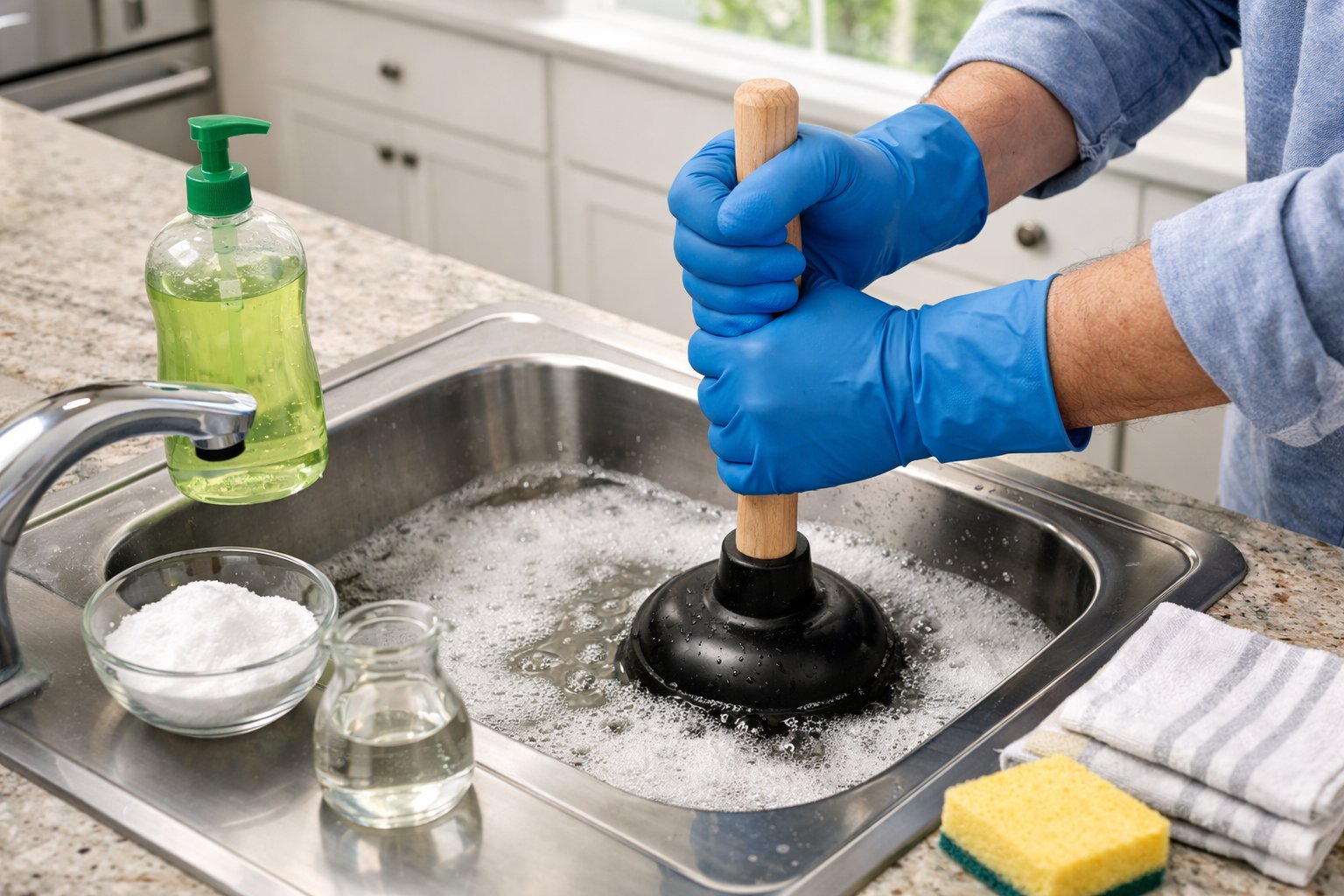
We can usually unclog grease using simple household items like boiling water, dish soap, baking soda and vinegar, or a plunger. Sometimes, though, you’ll need a drain snake or even professional help.
The good news? You don’t always need to call a plumber first. Many grease clogs respond well to DIY methods you can try right at home.
Understanding what causes grease buildup helps us fix current clogs and prevent future ones.
Let’s walk through the most effective ways to clear your drain, from gentle natural solutions to more aggressive mechanical methods. You’ll have your sink flowing again before you know it.
Key Takeaways
- Hot water, dish soap, baking soda, and vinegar are great first steps for dissolving grease clogs.
- Plungers and drain snakes work well for stubborn blockages when liquid solutions don’t cut it.
- Prevent grease clogs by disposing of cooking oils properly and flushing your drains with hot water regularly.
Understanding Grease Clogs in Kitchen Sinks
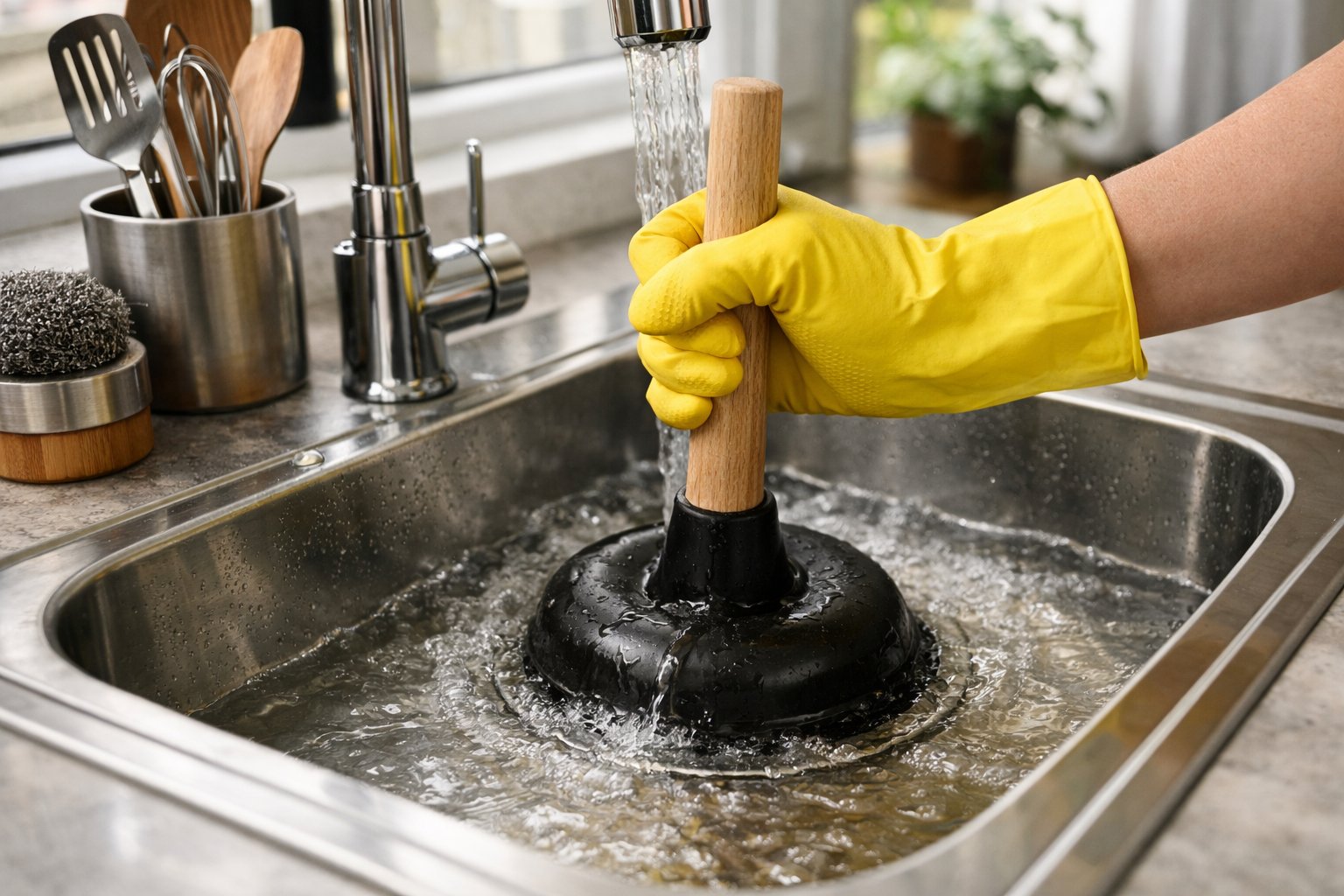
Grease clogs form when cooking fats cool and harden inside pipes. They trap food particles and debris, and before you know it, you’ve got a stubborn blockage.
Let’s break down how this buildup happens, what warning signs to watch for, and why these clogs can really mess up your plumbing.
How Grease Buildup Happens
When we pour hot cooking oil, bacon grease, or butter down the drain, it flows as a liquid.
However, grease solidifies as it cools in the pipes, leaving a sticky coating on pipe walls.
This coating acts like a magnet for food scraps, soap residue, and other debris. Each time we wash dishes or rinse the sink, more particles stick to the greasy surface.
Over time, the layer just keeps growing.
Even small amounts of grease add up. A tablespoon here, a bit of fatty food there—suddenly you’ve got a serious blockage.
The buildup narrows the pipe opening, and water flow gets restricted.
Cold water makes things worse by causing the grease to harden faster. The process sneaks up on you, so you don’t notice until drainage slows way down.
Common Signs of a Grease Clog
Slow draining water is usually the first thing you’ll spot. The sink just takes forever to empty after washing up.
You might hear gurgling sounds coming from the drain as air bubbles struggle to get past the clog. That’s trapped air trying to escape.
Foul odors show up when food and grease start to decompose inside the drain. The smell gets worse in warm weather or after running hot water.
Standing water in the sink means the clog’s gotten bad. Water backs up instead of draining—super annoying when you’re trying to clean up.
Sometimes, water backs up in one sink when you use another fixture or run the dishwasher. That usually means a shared drain line is blocked.
Why Grease Clogs Cause Plumbing Issues
Grease blockages don’t just mess up one pipe. They can spread through your kitchen plumbing, causing recurring clogs that get harder to fix each time.
Solidified grease is sticky and traps corrosive stuff against pipe walls, which can lead to deterioration. Metal pipes corrode, and plastic pipes might get weak spots.
Kitchen sink clogs from grease also crank up the pressure inside your plumbing. That can loosen pipe connections and cause leaks, which can wreck cabinets and floors.
If you wait too long, the problem gets pricier to fix. Professional cleaning costs shoot up when grease clogs reach the main sewer line, and at that point, you might see multiple drains backing up at once.
Essential Preparations Before Unclogging
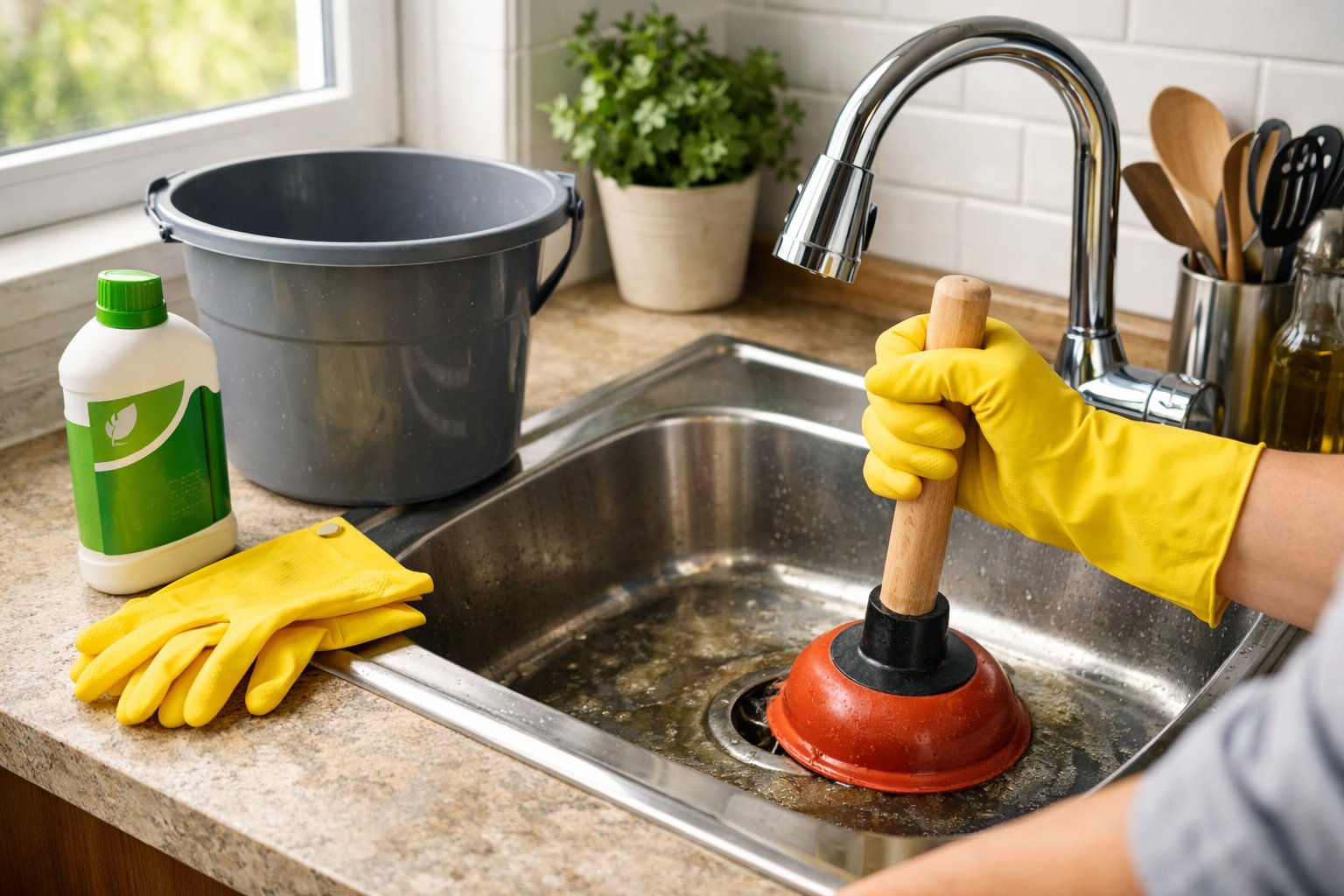
Before tackling a grease clog, it’s smart to prep your workspace and gather the right tools.
Setting up properly makes the whole process safer and just plain easier.
Safety Precautions and Tools Needed
Always wear rubber gloves to keep your hands safe from grease, bacteria, and hot water.
Safety glasses aren’t a bad idea either, especially if you’re working under the sink or using cleaning solutions.
You’ll want a plunger made for sinks, a bucket for catching water, and some old towels or rags for cleanup.
A flashlight helps you see down the drain. Don’t forget your cleaning stuff: baking soda, white vinegar, dish soap, and a kettle for boiling water.
If you’re planning to remove the p-trap, grab an adjustable wrench or pliers. A drain snake or auger can help with deeper clogs.
Keep everything close by so you’re not fumbling for tools with wet, greasy hands.
Removing Standing Water
Standing water just gets in the way and dilutes your cleaning solutions.
Get rid of as much water as you can before you start unclogging.
Use a cup or small container to scoop water into a bucket. For the last bit, soak it up with towels or a sponge.
If you’ve got a wet-dry vacuum, now’s the time to use it.
Why bother? Clearing out the water lets your cleaning stuff hit the grease directly, not just get watered down. Plus, it cuts down on messes when you’re working on the pipes.
Accessing the Drain and P-Trap
The p-trap is that u-shaped pipe under your sink. It’s there to catch debris and block sewer gases from coming up.
This spot is a favorite for grease to collect and cause clogs.
Put your bucket under the p-trap before you touch anything. Loosen the slip nuts on both ends using a wrench or your hands if they’re not too tight.
Gently pull the p-trap out and let any water drain into the bucket.
Check the p-trap for grease and gunk. Cleaning the p-trap often solves the problem right away.
Use a bottle brush or old toothbrush to scrub out hardened grease. Rinse it with hot water, then put it back together and see if the clog is gone or if it’s further down.
Effective DIY Methods to Unclog Grease from Kitchen Sink
You can break down grease clogs with stuff you probably already have at home—no harsh chemicals or expensive plumber visits needed.
These methods either melt the grease, create reactions to dissolve buildup, or use abrasives and hot water to clear things out.
Boiling Water Flush Method
The easiest way to tackle grease buildup is just with boiling water.
Boil a full kettle or big pot of water, then pour it straight down the drain in a steady stream.
The heat melts grease that’s hardened in the pipes. This works best for minor clogs or as a preventive measure after greasy meals.
If it doesn’t work the first time, wait 10-15 minutes and try again. Stubborn clogs might need two or three rounds.
This method costs nothing and doesn’t need any fancy tools.
Heads up: Skip this on PVC pipes—boiling water can soften or damage plastic plumbing if you do it too often.
Using Dish Soap and Hot Water
Dish soap cuts grease on your plates, and it works the same magic inside your pipes.
Squeeze about 1/4 cup of liquid dish soap right into the drain.
Let it sit for five minutes to coat the buildup. Then pour a pot of boiling water down the drain slowly.
The combo of soap and hot water breaks down grease molecules and flushes them away.
If you want, follow up with a plunger. Fill the sink with a few inches of hot water first, then plunge away—the extra water helps make a better seal and gives you more force.
Baking Soda and Vinegar Solution
The classic baking soda and vinegar trick creates fizz that helps break apart grease.
Pour 1/2 cup of baking soda into the drain. Push it down with a spoon if needed.
Next, pour in 1 cup of white vinegar. It’ll bubble up right away.
Cover the drain with a stopper or wet cloth to keep the reaction going down, not up.
Let it sit for 30 minutes to an hour. The fizz creates pressure and heat that loosens grease.
Finish by flushing with boiling water. Your drain should smell fresher too.
Salt and Baking Soda Technique
Mixing salt and baking soda adds some grit to the cleaning process.
Combine 1/2 cup table salt with 1/2 cup baking soda in a bowl.
Pour the dry mix into the drain opening. Salt’s coarse texture scrubs grease off pipe walls while baking soda cleans gently.
Let it sit for several hours, or overnight if you can. The longer it sits, the better it works.
Finish with a kettle of boiling water to flush it all away. This one’s especially good for thick, old grease buildup.
Mechanical Approaches for Stubborn Grease Clogs
If natural remedies don’t cut it, mechanical tools give you the muscle to break up tough grease blockages.
These methods use pressure and special equipment to get at clogs that just won’t budge.
Plunging the Kitchen Sink
A sink plunger creates pressure that can bust up grease clogs in the drainpipe.
Fill the sink with enough water to cover the plunger cup. This helps create a good seal for more effective plunging.
Before you start using a plunger, block the overflow opening with a wet rag. That way, all the pressure goes straight down the drain.
Set the plunger over the drain. Push down hard to make a seal, then pull up sharply—don’t break the seal.
Repeat this motion fast for about 15-20 seconds. The plunger’s pressure and suction loosens the grease clog from the pipe walls.
After plunging, run hot water and see if the drain is flowing again. Sometimes it takes a couple tries, but it’s worth the effort.
Using a Drain Snake or Auger
A drain snake, sometimes called a plumber’s snake, can reach deeper clogs that a plunger just can’t. This flexible metal cable goes several feet into the drainpipe.
We insert the snake’s end into the drain and push it forward slowly. As we feed the snake in, we twist the handle clockwise.
This rotation helps the snake work around bends and break through grease buildup. When we hit resistance, we’ve probably found the clog.
We keep turning the auger and gently push forward. The tip either breaks up the hardened grease or grabs onto it.
Once we feel the clog give, we slowly pull the snake back out. Usually, it brings chunks of grease and debris with it.
We clean the cable thoroughly before putting it away. After using the snake, we flush the drain with hot water to wash out any leftover gunk.
Clearing the P-Trap Manually
The P-trap is that u-shaped pipe right under the sink. Grease loves to settle there since water slows down in the curve.
Cleaning the P-trap gives us direct access to stubborn clogs. First, we place a bucket underneath to catch water and debris.
We loosen the slip nuts on both ends, either by hand or with a wrench. Once loose, we remove the whole P-trap section carefully.
Inside, we often find a thick coating of solidified grease and food bits. We scrape out the gunk with a brush or old rag, then rinse the P-trap with hot soapy water.
Before putting it back, we check for cracks or wear. We reconnect the P-trap, tighten the slip nuts by hand, and give them a little extra turn with the wrench.
We run water to check for leaks around the joints. If everything stays dry, we’re good to go.
When and How to Use Chemical and Enzymatic Drain Cleaners
Chemical drain cleaners work fast on tough grease clogs. Enzymatic cleaners take a gentler, slower approach, breaking down organic buildup over time.
It’s important to know which one to use and how to use them safely. That way, we protect our pipes—and ourselves.
Choosing Between Enzymatic and Chemical Cleaners
We need to match the cleaner to the specific grease problem in our kitchen sink. Chemical drain cleaners use strong ingredients like lye or sulfuric acid to dissolve grease fast, so they’re best for really stubborn clogs that need quick action.
These products generate heat as they react, which helps melt hardened fats. Enzymatic drain cleaners work differently, using bacteria and enzymes to digest grease and food particles.
They’re slower than chemicals but much safer for older pipes and the environment. For fresh grease clogs, we can use a caustic cleaner that works well on kitchen grease.
When dealing with gradual buildup, enzymatic cleaners help prevent damage to metal pipes. Gel-based formulas stick to pipe walls better, giving them more time to work on the grease.
Enzymatic cleaners work more gradually to maintain clear drains and help prevent future clogs. They’re great for monthly maintenance, not so much for emergencies.
Safe Application of Commercial Drain Cleaners
We always put on chemical-resistant gloves and safety goggles before opening any drain cleaner. No one wants a splash of that in their eyes.
We remove standing water from the sink first. Then, we pour the recommended amount of cleaner right into the drain, following the label instructions.
We never use more than directed. More product won’t speed things up—it just adds risk.
Never mix different commercial drain cleaners. That can create dangerous fumes or even explosions.
We also avoid using a plunger or snake right after pouring in chemicals, which risks splashing caustic liquid on ourselves.
After waiting the specified time, we flush the drain with hot water for several minutes. We keep windows open or fans running for ventilation.
If the clog doesn’t clear after one try, it’s usually smarter to call a pro instead of dumping in more chemicals.
Preventing Future Grease Clogs
The best way to deal with grease clogs is to avoid them in the first place. Smart habits, the right tools, and regular maintenance keep things flowing smoothly.
Proper Grease Disposal Habits
We should never pour cooking oil, bacon grease, or any fatty stuff down the drain. Even if we chase it with hot water, it’ll cool off and harden inside the pipes.
The right move is to collect grease in a container. An old coffee can, a jar, whatever works—just make sure it’s heat-safe.
Once the grease cools and solidifies, we toss the whole thing in the trash. Before washing dishes, we scrape all food scraps and extra grease into the garbage.
Using paper towels to wipe greasy pans and plates helps a ton. This little step keeps a lot of fat out of the drain.
We should use a drain strainer in every sink. These cheap mesh or metal catchers trap food bits before they go down the drain.
Cleaning the strainer after each use only takes a few seconds and can save us from huge headaches later.
Installing and Maintaining Grease Traps
If we cook a lot, installing grease traps adds extra protection. These devices catch fats, oils, and grease before they hit the main pipes.
Grease traps come in different sizes. Some fit under the sink, while bigger ones go outside.
We pick a size based on how much cooking we do and how many people live here. Grease trap cleaning needs to happen regularly or the system just doesn’t work.
Most home traps need cleaning every one to three months. We remove the trap, scrape out the grease, and wash it with hot soapy water.
Skipping this step kind of defeats the purpose of having a trap in the first place.
Routine Sink Maintenance Tips
Monthly care keeps our drains in good shape. Once a month, we pour a pot of boiling water down each drain to melt any little bits of grease.
Following up with baking soda and vinegar gives extra cleaning power. We pour half a cup of baking soda in, then half a cup of white vinegar.
Let it fizz for 30 minutes, then flush with more hot water. We can also use enzymatic cleaners monthly—these natural bacteria slowly eat away at grease without hurting pipes.
Running hot water for 30 seconds after each use helps too. It washes away small amounts of grease before they can stick.
Once a week, adding a squirt of dish soap while running hot water gives an extra grease-fighting boost.
When to Call a Professional Plumber
Some grease clogs just won’t budge with DIY methods. A complete blockage or recurring problems usually means it’s time for professional help to avoid long-term damage.
Signs You Need Expert Help
We should call a plumber when our own attempts fail after several tries. If water drains super slowly or stops altogether, that’s a sign of a serious clog that needs special tools.
Recurring clogs are another big warning. If the kitchen sink backs up again and again, the grease has probably spread deep into the pipes.
If multiple drains in the house clog at once, that’s often a main sewer line issue. Foul smells or gurgling sounds from other fixtures can mean we’ve got a bigger problem that needs a pro.
What to Expect from Professional Services
A plumber usually starts by inspecting the pipes with a special camera to find the exact spot and size of the grease clog. They use professional drain cleaning tools like hydro-jetters that blast high-pressure water to break up and flush away grease.
For tough clogs, plumbers might use motorized drain snakes or augers that reach deep into the system. These tools are much stronger than the versions we can buy at the store.
Most pros can fix grease clogs in a few hours and clean up afterward. They’ll also give advice on preventing grease buildup in the future.
Frequently Asked Questions
Grease clogs are annoying and can really slow things down. Luckily, simple stuff like baking soda, vinegar, and hot water can break up grease without harsh chemicals.
What home remedies are effective for unclogging a grease-blocked kitchen sink?
We recommend starting with boiling water. Pour a full kettle of boiling water straight down the drain and let it sit for several minutes to melt the grease.
Baking soda and vinegar work well for moderate clogs. Pour a cup of baking soda down the drain, then a cup of white vinegar.
The fizzing helps break up grease stuck to the pipes. Salt mixed with baking soda is another solid option—combine half a cup of each, pour it in, wait 10 minutes, then flush with hot water.
Dish detergent can also help. Pour it right onto the clog, let it sit for 10 minutes, then follow up with a plunger or hot water flush.
How can baking soda be used to clear a kitchen sink clogged with grease?
Baking soda works best with hot water or vinegar. Pour a cup of baking soda into the drain first.
For the hot water method, wait five minutes, then add two cups of boiling water. The combo helps dissolve grease, with baking soda acting as a gentle scrub.
With vinegar, you get a bubbly reaction that breaks down grease even better. After the baking soda, pour in a cup of vinegar and cover the drain with a plug or wet cloth.
Wait 15 minutes, then flush with hot water. Doing preventative cleaning once a month with baking soda can help keep big clogs from forming.
What are natural ways to unclog a kitchen sink filled with grease?
Hot water is the simplest natural fix. Pour boiling water down the drain in stages, giving it time to melt the grease between pours.
Vinegar and baking soda make a natural cleaning combo. The bubbles help loosen grease from the pipe walls.
Salt, when mixed with baking soda or hot water, acts as a gentle scrubber. The rough texture helps scrape away grease while the heat melts it.
Lemon juice and baking soda is another option. The citric acid in lemon juice cuts through grease and leaves a fresher smell behind.
What methods can dissolve grease buildup in kitchen sink pipes?
Hot water is probably the simplest grease dissolver out there. The heat melts solid grease back into liquid, so it can move through your pipes more easily.
Dish soap has degreasers made to break down cooking oils and fats. Pour a good amount of liquid dish soap into the drain, then wait about ten minutes before following up with boiling water.
Commercial enzyme-based cleaners give you a chemical-free option for dissolving tougher blockages. These products use natural bacteria that eat away at grease over several hours.
Honestly, we avoid harsh chemical drain cleaners. They might seem like a quick fix, but they can damage pipes and usually end up causing more trouble than they’re worth.
A plunger lets you create pressure to help push dissolved grease through. Try using it after any dissolving agent to move loosened grease along.
How can I unclog a kitchen sink that has standing water and grease buildup?
First, get rid of as much standing water as you can. Scoop it out with a cup or small bucket until the sink’s mostly empty.
A plunger works best if there’s still a little water covering the drain. Add just enough to cover the plunger cup and get a good seal.
Place the plunger over the drain and pump it up and down, maybe 15 or 20 times. The pressure and suction should help break up the grease clog.
After plunging, pour boiling water down the drain. Give it a few minutes between pours to let the heat work on any leftover grease.
If water still refuses to drain, grab a drain snake. Feed it into the drain and rotate to catch or break up any stubborn grease clumps.
What are the best practices for dealing with a grease-clogged kitchen sink?
Don’t pour fats, oils, or grease down the kitchen drain. These substances solidify as they cool and create blockages that attract other debris.
After washing greasy dishes, run hot water for about 30 seconds. The hot water helps flush leftover grease through the pipes before it has a chance to stick.
Use a sink strainer to catch food particles. Toss whatever the strainer collects into the trash after each use.
Every month or so, pour boiling water or baking soda down the drain. This kind of regular cleaning can really keep nasty clogs at bay.
Wipe greasy pans and dishes with paper towels before you wash them. Honestly, that one small step keeps a lot of grease out of your pipes.
If you’ve tried everything and the sink’s still clogged, it might be time to call a plumber. Sometimes, stubborn blockages mean there’s a bigger issue deeper in the plumbing that needs special tools.